Mumbai: Some festivals are events on the calendar; others become institutions in their own right.
The Sanjukta Panigrahi Yuva Mahotsav, organised by Smitalay, undoubtedly belongs to the latter category. Launched on August 24, 2004, by Smitalay, Sanjukta Panigrahi Yuva Mahotsav has only gone from strength to strength and carved a niche for itself in India’s cultural landscape.
This year, the festival’s 23rd edition was hosted at the Mini Theatre, Rabindra Natya Mandir, Prabhadevi, Mumbai, on August 24. It came with a refreshing twist. Instead of bringing young dancers from across the country, it turned the spotlight on promising talent from Mumbai itself.
Before taking you to the auditorium, it would be only fitting to inform you about Smitalay, the institution that has kept this flame burning for more than two decades.
Smitalay is the very first Odissi dance school established in Mumbai, following Guru Kelucharan Mohapatra’s lineage. Founded by Guru Jhelum Paranjape in memory of her close childhood friend late actor Smita Patil, Smitalay is much more than a dance institution.
Its very name captures its philosophy: Smit is the smile, tal the rhythm and lay the beat. As its evocative description goes, there should be a smile on every face, rhythm in the body and a beat in every foot—that is Smitalay.Smitalay, a dance wing of Sane Guruji Arogya Mandir, a charitable trust committed to improving the lives of the underprivileged, is immensely contributing to the cultural life of Mumbai.
The Sanjukta Panigrahi Yuva Mahotsav was conceived by Guru Jhelum Paranjape, director of Smitalay, in 2004 as a tribute to her beloved sister and revered Odissi exponent Sanjukta Panigrahi, affectionately known as Sanju Nani within the Odissi fraternity. Sanjukta Panigrahi passed away in 1998. Had she lived, August 24, 2004, would have marked her 60th birthday. Guru Paranjape, who adored and deeply respected her, chose that date to launch a festival in her memory.
The choice of a festival featuring young dancers was no coincidence. Sanju Nani had always encouraged young dancers, while the festival circuit of those days largely revolved around established names. The idea, therefore, was hugely appreciated by one and all.
The first edition, held on August 24, 2004, was devoted exclusively to Odissi. Over the years, the festival opened its doors to other classical dance forms, including Sattriya and Chhau—styles that rarely found a place on mainstream festival stages.
Through all the ups and downs, the festival has been held since its inaugural year. Twenty-two years later, it continues to provide a platform where young dancers can find their feet, discover their voices and take tradition forward.
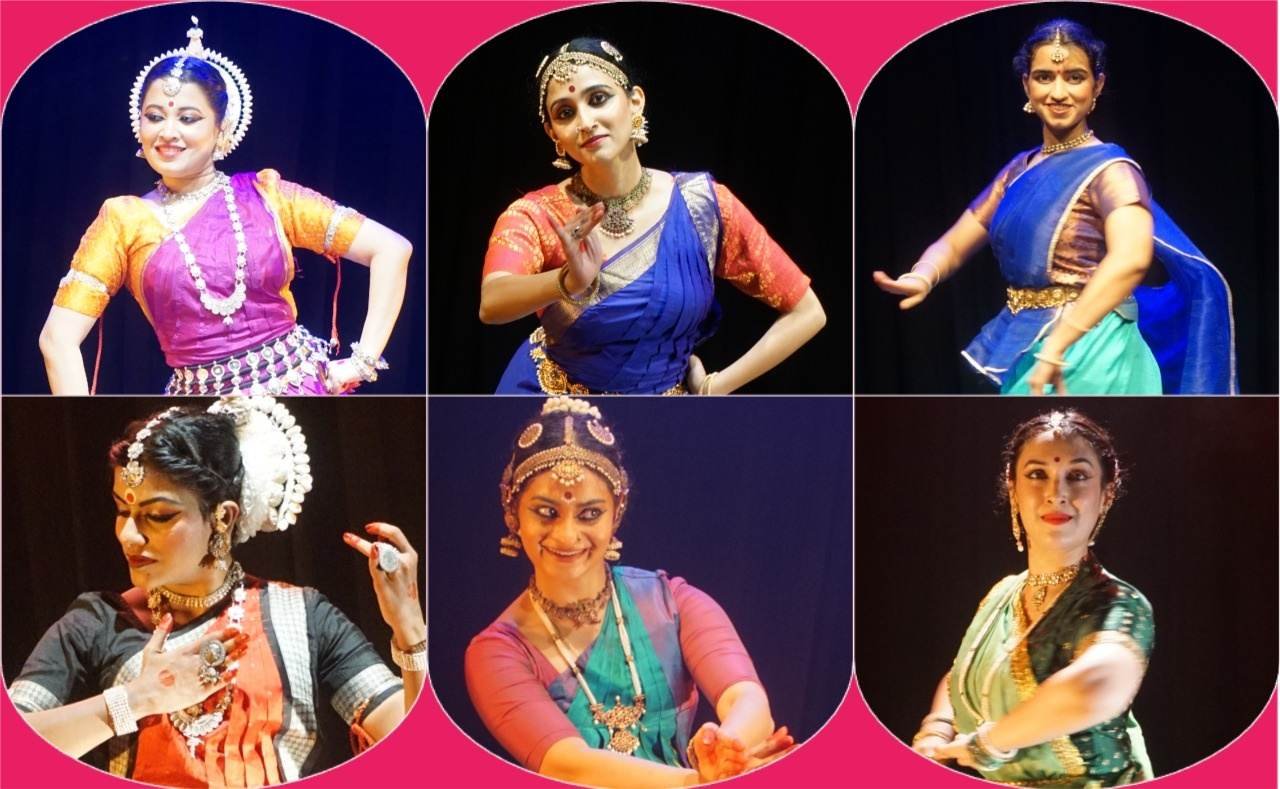
The 23rd edition of the festival presented six promising young dancers, each with a distinct artistic voice. Together, they represented three classical traditions—Odissi, Bharatanatyam and Kathak—forms that have travelled across generations and continue to acquire new energy and meaning through younger practitioners.
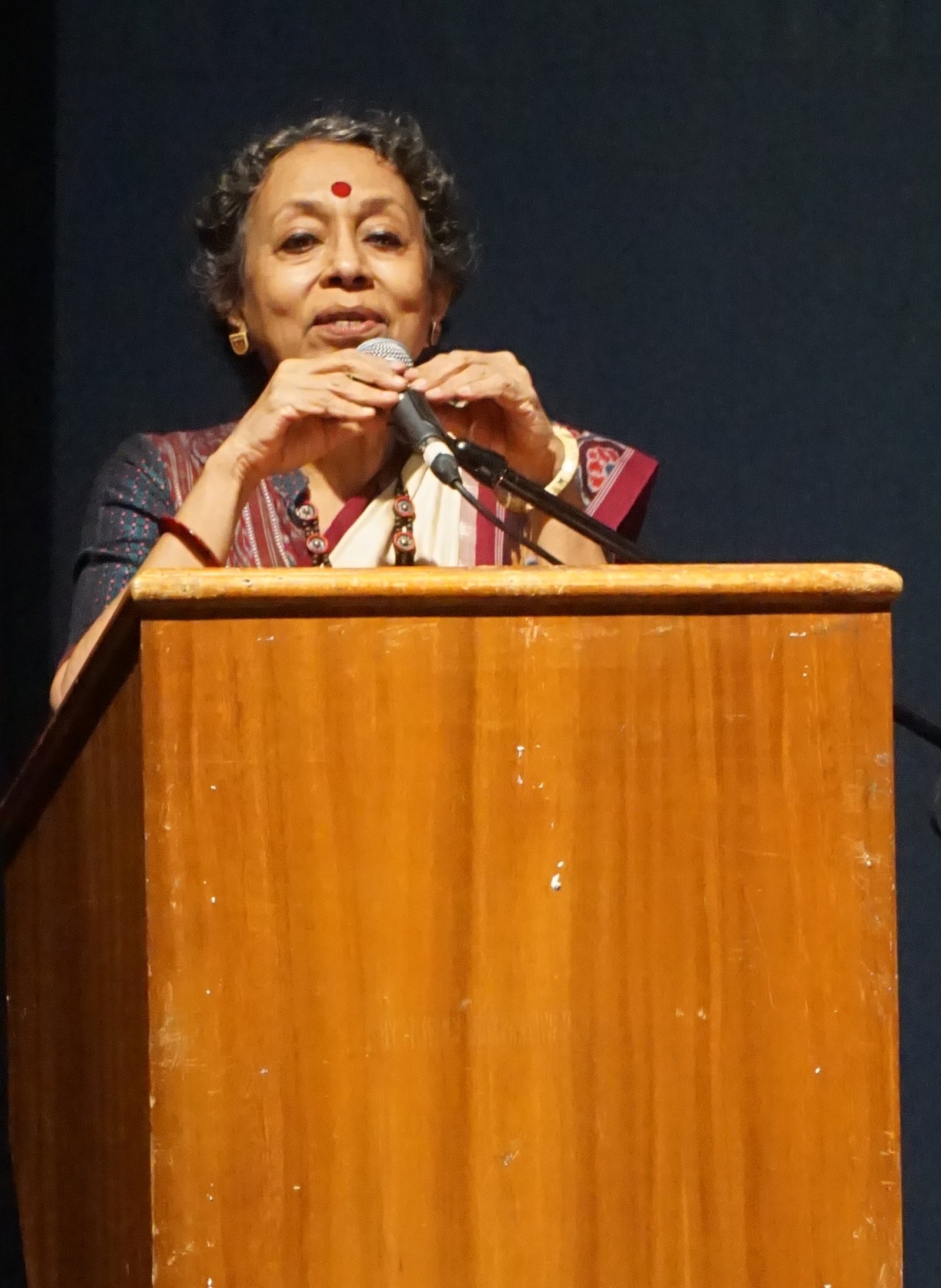
If the festival has come so far and will celebrate its silver jubilee edition after two years, much of the credit belongs to Jhelum Paranjape, affectionately addressed as Jhelum Tai by her disciples and juniors. A first-batch disciple of the legendary Padma Vibhushan Guru Kelucharan Mohapatra, Paranjape has poured her heart and soul into ensuring that the festival remains a vibrant platform for young talent.
As the dusk settled on the horizon of Mumbai city in shades of gold and amber, the auditorium gradually filled with dignitaries, art aficionados and audiences. By the time the screens parted away and emcee of the evening Pradnya Sinha, one of senior students of Smitalay, appeared on the stage, the auditorium was packed to capacity.
The evening got off to an auspicious note with the ceremonial lighting of the lamp by SNA awardee and well known Kathak dancer, teacher and choreographer Uma Dogra; eminent Odissi dancer Nivedita Mukherjee, renowned Bharatanatyam dancer Anjana Dongre, and celebrated Kathak dancer Pooja Pant lighting the ceremonial lamp, praying for the success of the festival. Paranjape also joined them on stage.
Following the felicitation of the guests, it was time for the young dancers to take centre stage.
The first performer of the evening was Odissi dancer Apurva Dani, a disciple of Ankur Ballal and Guru Paranjape. She began her recital with Shankarabharanam Pallavi choreographed by Adi Guru Pankajcharan Das. She did full justice to Adi Guru’s thought, by combining perfect torso movement with precise footwork. She concluded with an ashtapadi from Jayadeva’s Geet Govind ‘Sakhi Hey Keshi Mathana Mudaram’, one of the master pieces of legendary Padma Vibhushan Guru Kelucharan Mohapatra’s choreographies.
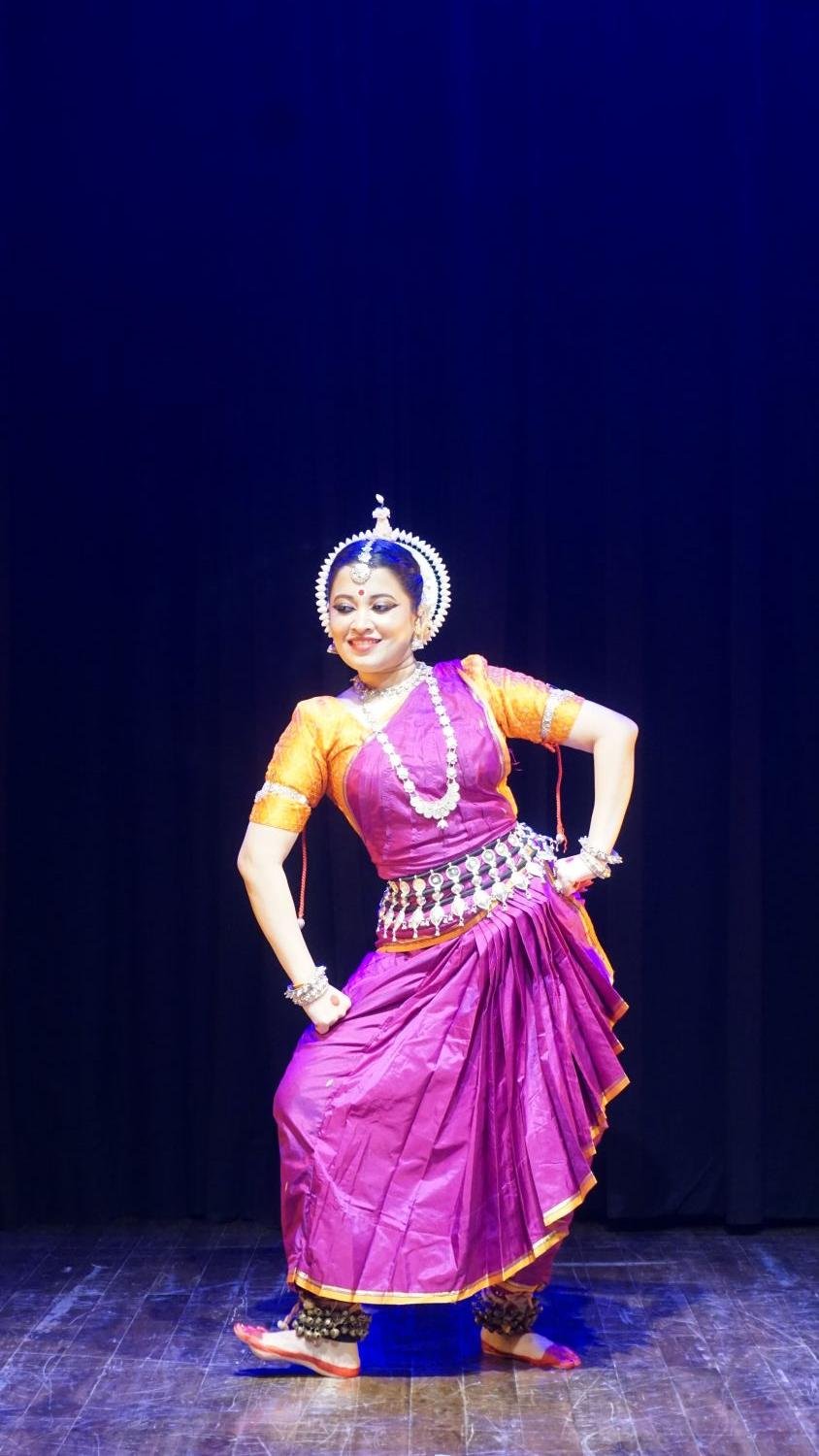
She portrayed Radha very sensitively, bringing alive her eagerness, coyness and longing as she urges her friend to bring Krishna to her.Here too she got the full marks. Her lyrical body movements and finely etched expressions instantly struck a chord with the art lovers, earning warm and well-deserved appreciation.
Keeping the momentum alive, Bharatanatyam dancer Nidhi Dongre, a disciple of Guru Anjana Dongre, presented a Marathi Varnam choreographed by legendary Bharatnatyam Guru, late Parvati Kumar, followed by “Abir Gulaal”, an ‘Abhang’ (devotional song) by Chokha Mela, a well-known saint poet of Maharashtra. Performing a demanding half-hour Varnam is no mean feat, particularly for a young dancer. Though she got completely exhausted by the end, soldiered on and gave the performance her all.
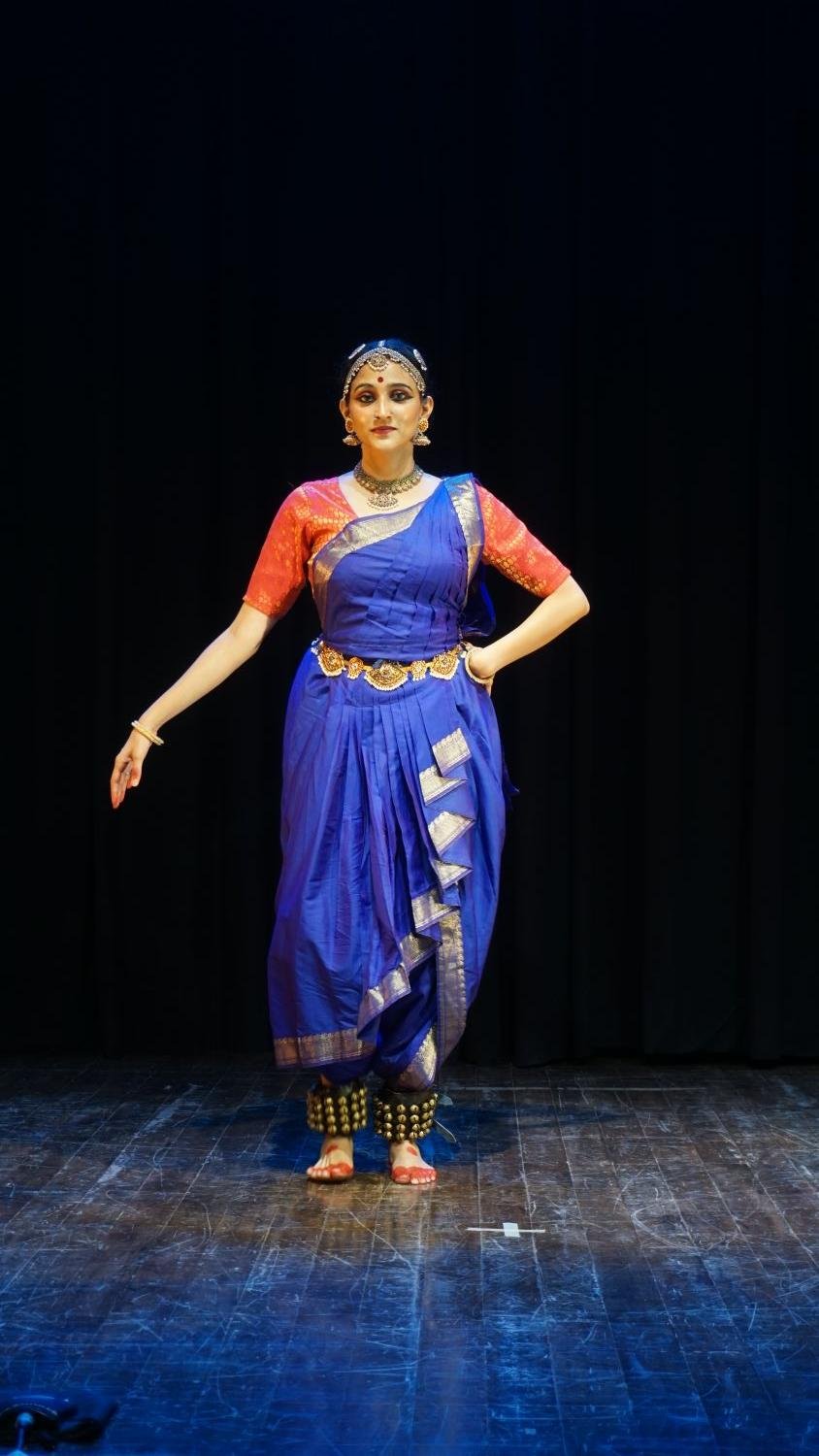
Her expressive movements, abhinaya and carefully calibrated presentation won generous applause. It was a performance that demonstrated not merely youthful enthusiasm but also considerable stamina and commitment.
The spotlight was then shifted to a captivating solo Kathak recital by Vidisha Navalkar, a disciple of Guru Pooja Pant.
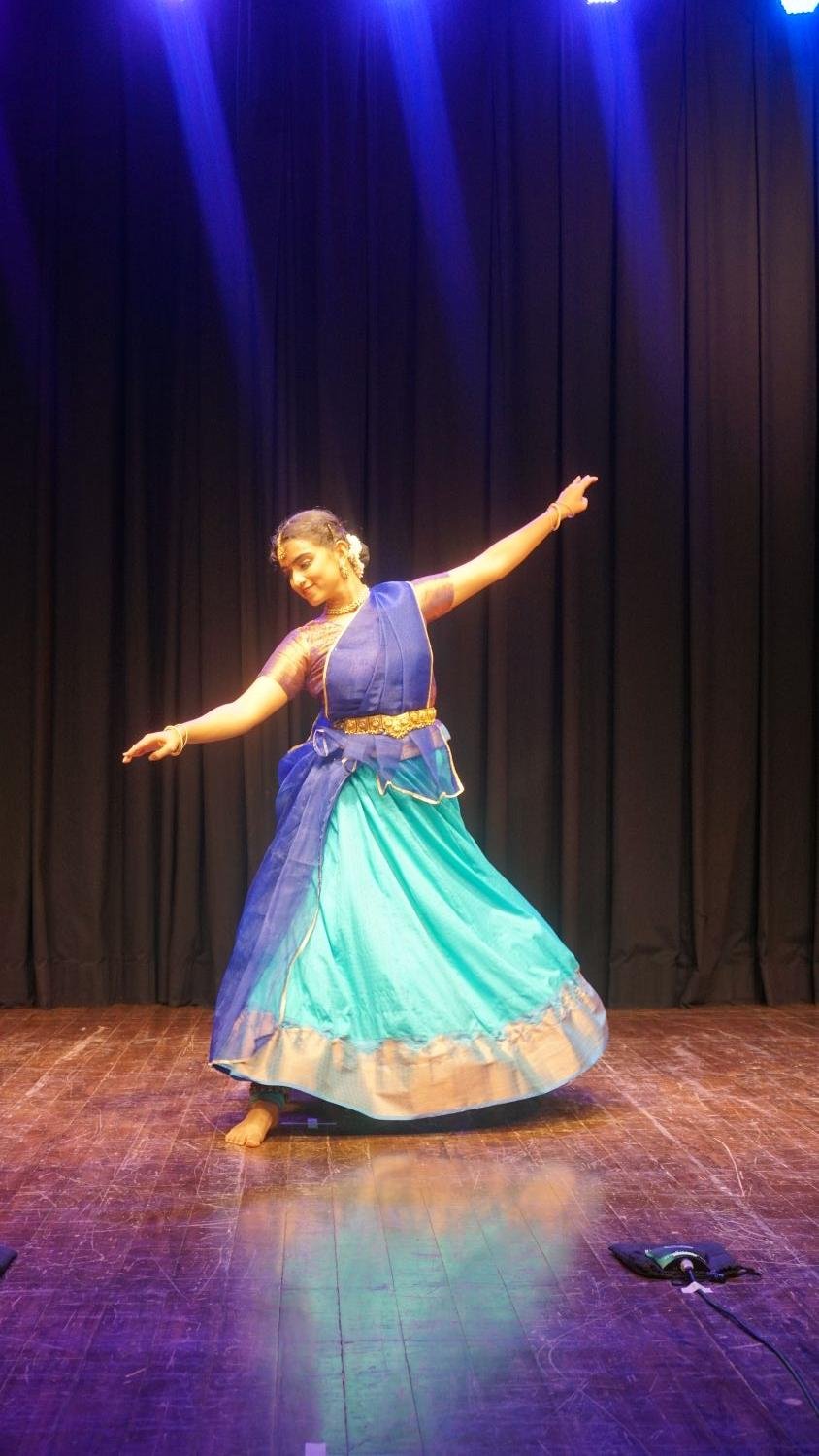
Beginning with an invocatory piece and concluding with a Thumri, she presented ‘Taal Dhamar’ in the ‘Taal Paksh’.Her electrifying footwork, assured spins and striking poses, executed across varying time cycles and speeds, turned the stage into a playground of rhythm.
The fourth item of the evening was an Odissi recital by Srinidhi Mohan, a disciple of Guru Nivedita Mukherjee.
She began with a short Pallavi and went on to a piece “Parvati Mangalam”, choreographed by herself with a little help from her guru and guru behan. The piece stood out for its ambition and originality. The vigorous dancing of the ganas playing instruments, Shiva’s omnipresence, Parvati’s manifestation and convincing her mother how Shiva is the right person to wed came together to create a lively dramatic canvas.
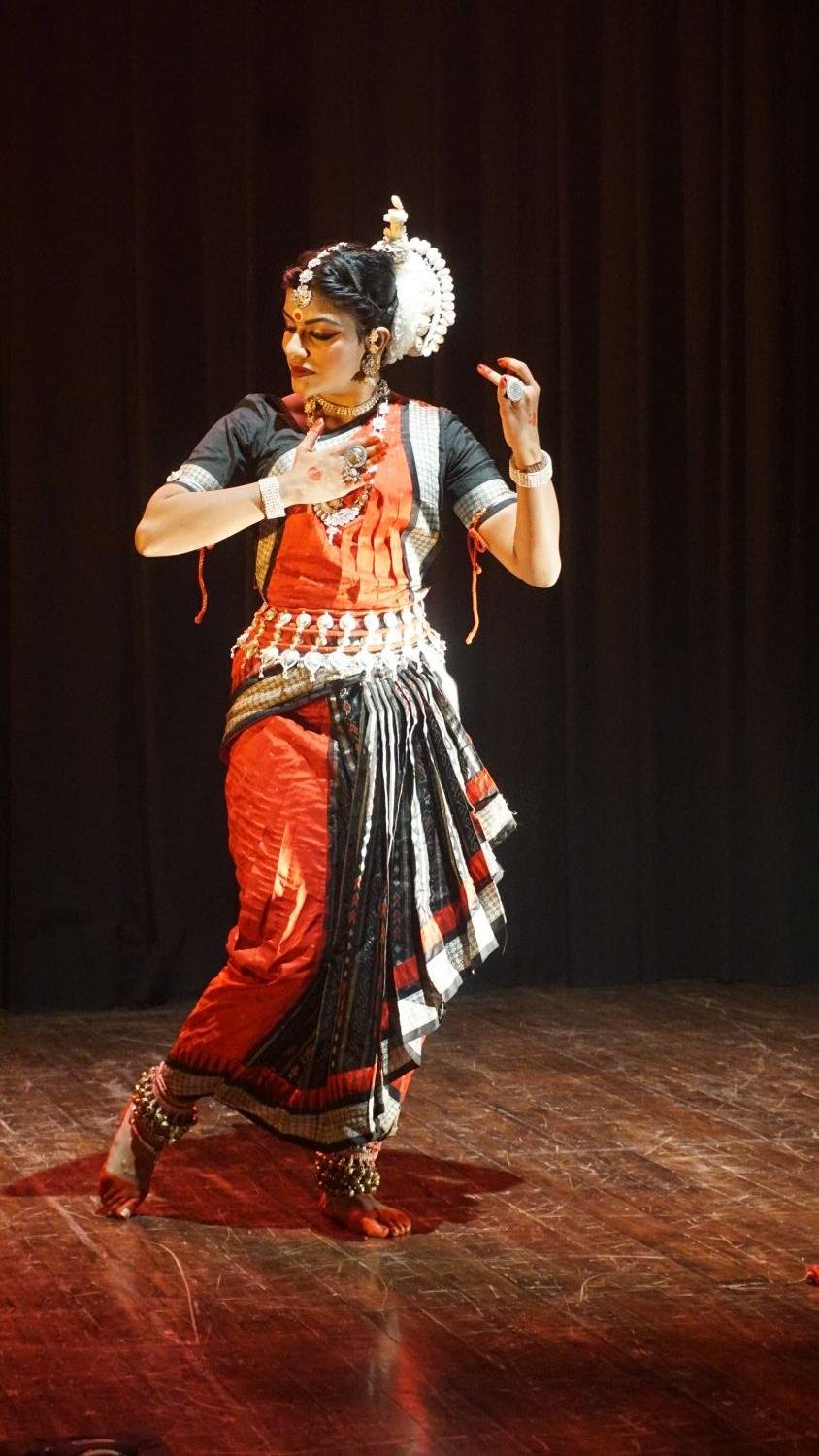
Mohan deserves credit for having the courage to do something new, and then executing it too. She brought the recital to a close with a striking portrayal of Hanuman.Her strong abhinaya and ability to slip effortlessly into different characters made the presentation accessible even to viewers unfamiliar with the finer grammar of classical dance.
The penultimate item was a Bharatanatyam recital by Priyanjali Rao, a disciple of Guru Revathi Sriniwasraghavan. She too chose Chokha Mela’s Abir Gulaal, followed by Surdas’s beloved composition Main Nahi Maakhan Khaayo. Through the latter, Rao brought to life the playful young Krishna and his affectionate exchanges with mother Yashoda.
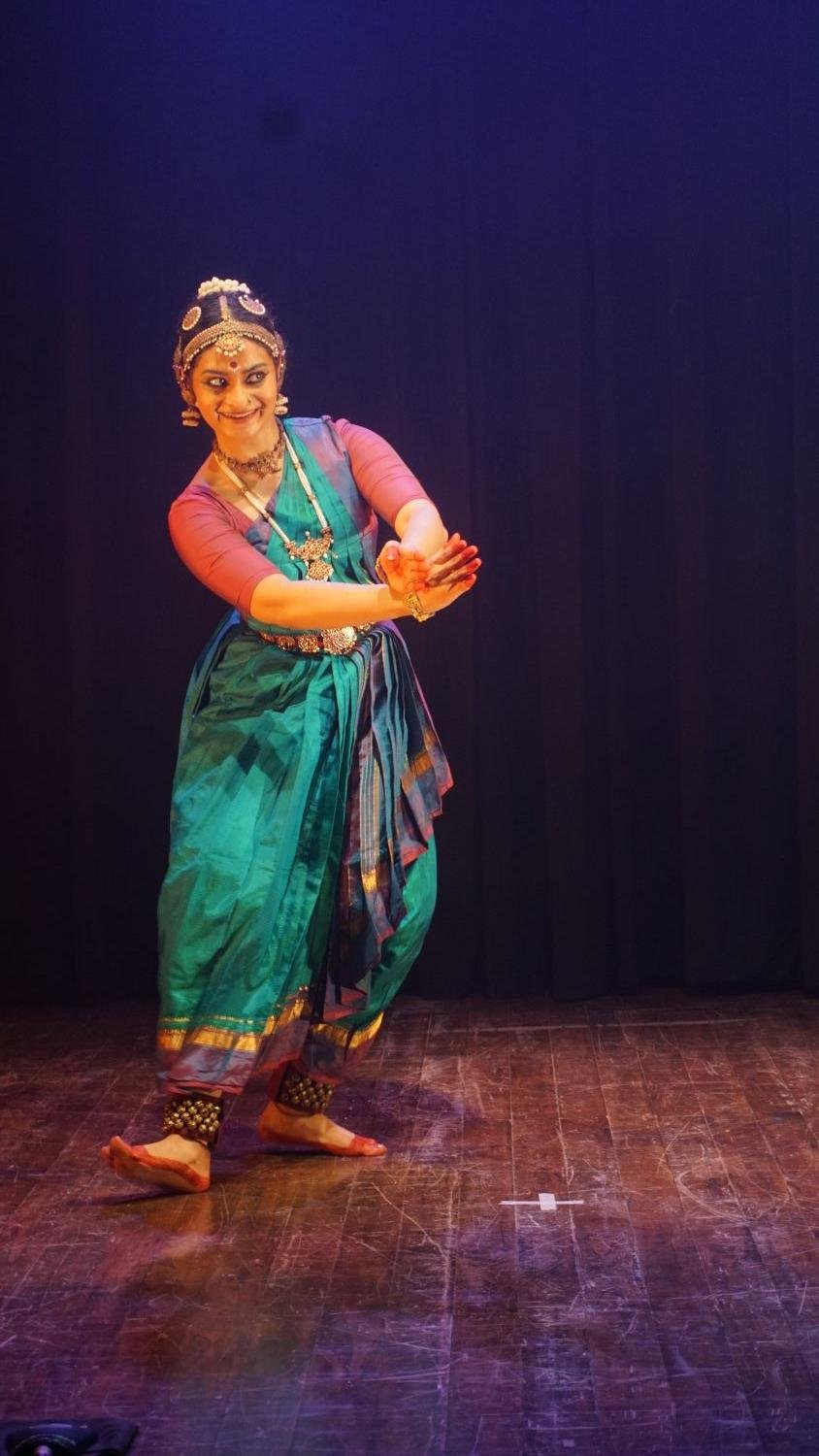
Her restrained yet expressive presentation allowed the emotional nuances to breathe. With carefully measured movements and convincing abhinaya, she brought the narrative vividly to life and kept the connoisseurs riveted to their seats.
The curtain came down on a high note with a mesmerising Kathak performance by Shalmali Zankar, a disciple of Guru Manisha Jeet.
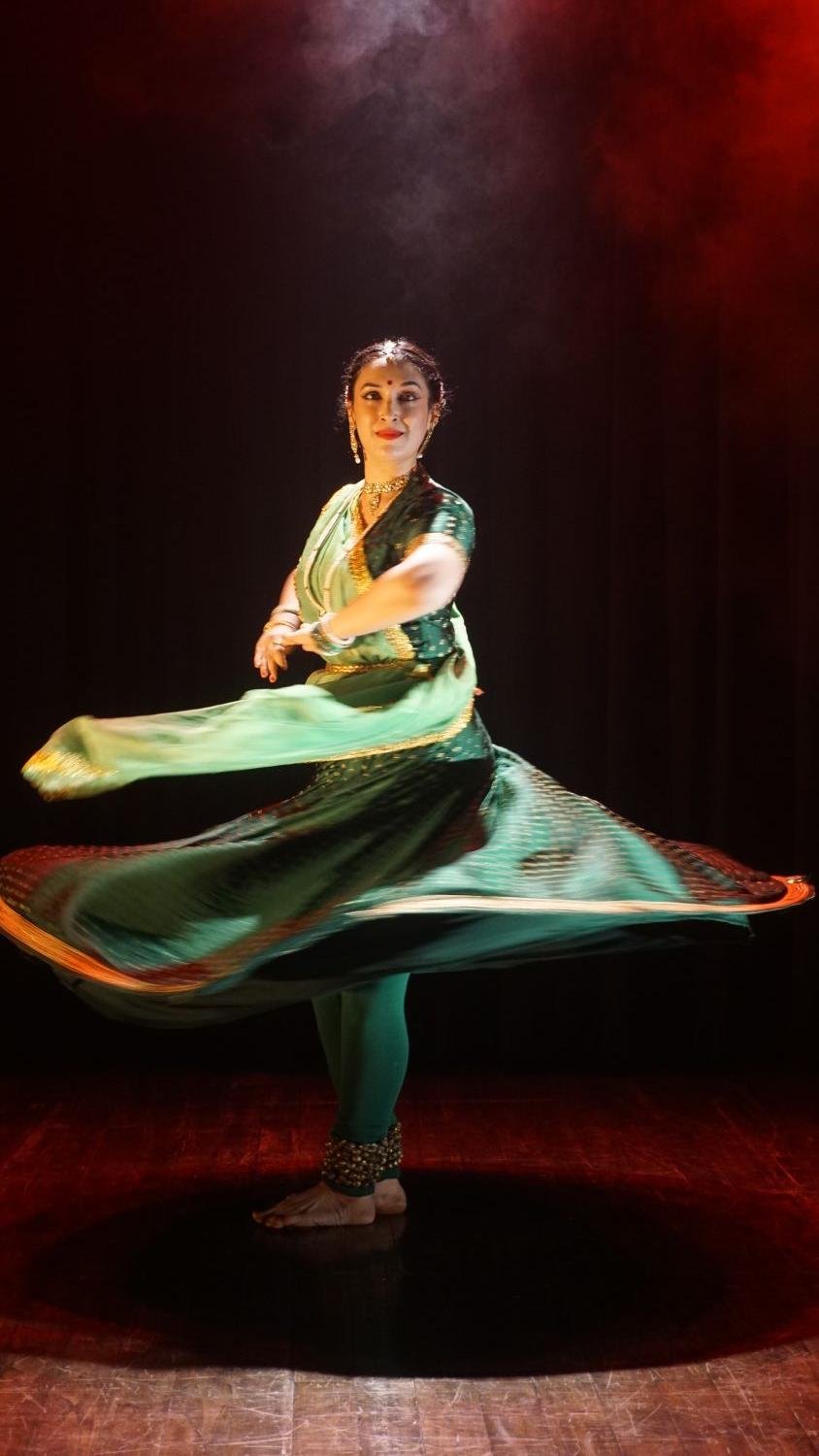
She, too, began with an invocatory piece and ended with a Thumri. In the ‘Taal Paksh’, she chose ‘Taal Dhamar’.What stood out was her complete involvement in the performance.
There was an infectious sense of engagement in her dancing that drew the audience into her artistic world.
And so, an evening that had begun with the traditional lighting the lamp ceremony ended with the stage glowing with the energy of six young dancers.
As the audience slowly filed out, they carried home more than memories of a splendid evening. They had witnessed a celebration in which devotion met discipline tradition met youthful imagination, and inherited grammar found new expression.
If the enthusiastic response from the Mumbai audience was anything to go by, the stage is already set for another rendezvous with young talent when the Sanjukta Panigrahi Yuva Mahotsav returns next year.