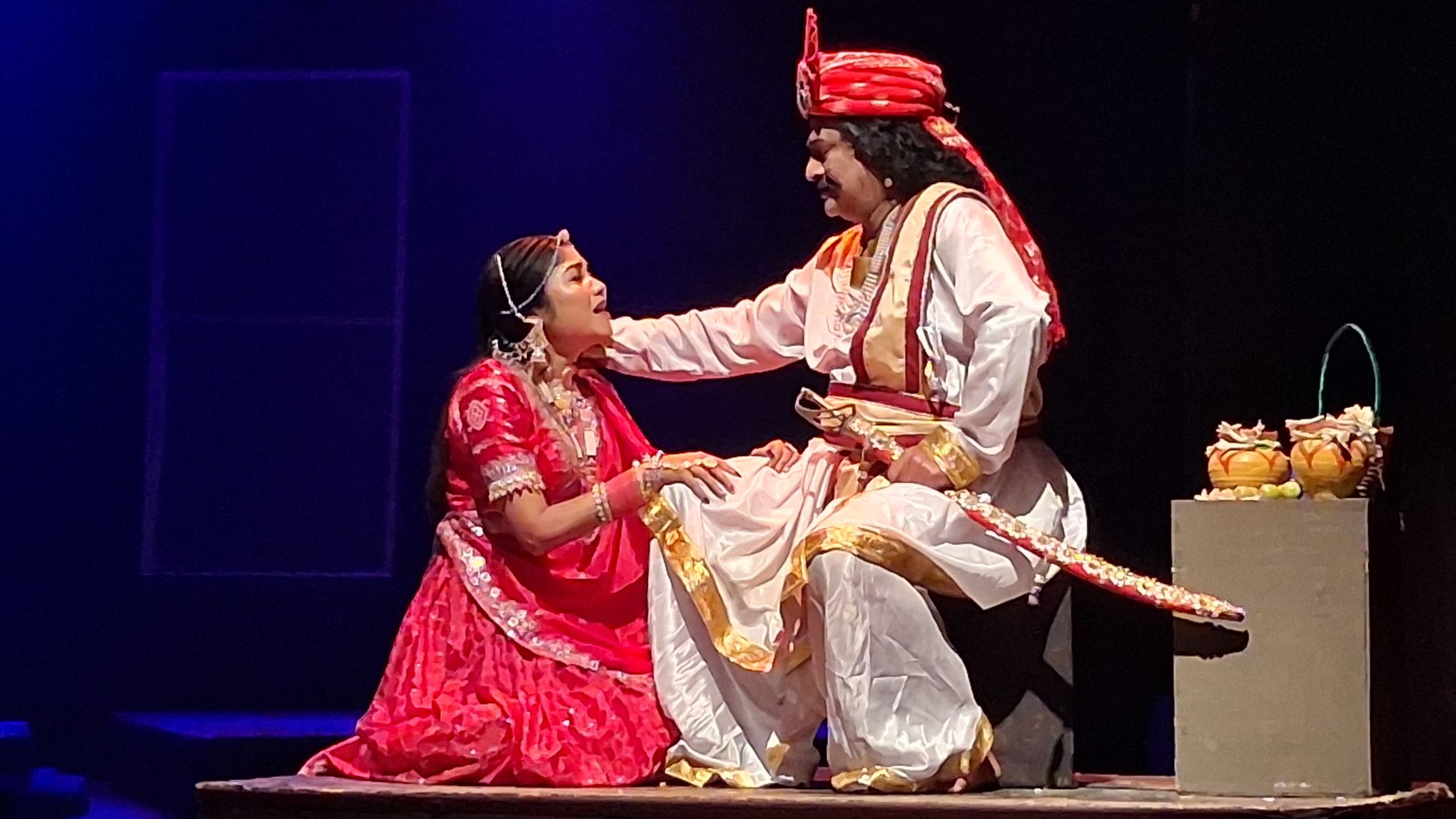
Bhubaneswar: The concluding evening of three-day theatre festival of Uttara Purusha, one of the leading theatre groups in the state, at Rabindra Mandap here on Thursday, took the theatre lovers on a poignant journey through history, unfolding tales of sacrifice, pain and resilience of three legendary princesses across time.
The festival closed with Rajajema, a powerful stage adaptation of a literary work by noted litterateur Dr Gourahari Das. The play was adapted and directed by Debadatta Pati, secretary of Uttara Purusha, one of the state’s leading theatre groups.
Staying true to Odisha theatre’s long tradition of drawing inspiration from literature, Rajajema emerged as a deeply evocative production.
The play opens at the State Art Gallery where an artist named Chitrasena is commissioned to draw portraits of three princesses which will be exhibited at the Rajajema Gallery on the day of its inauguration.
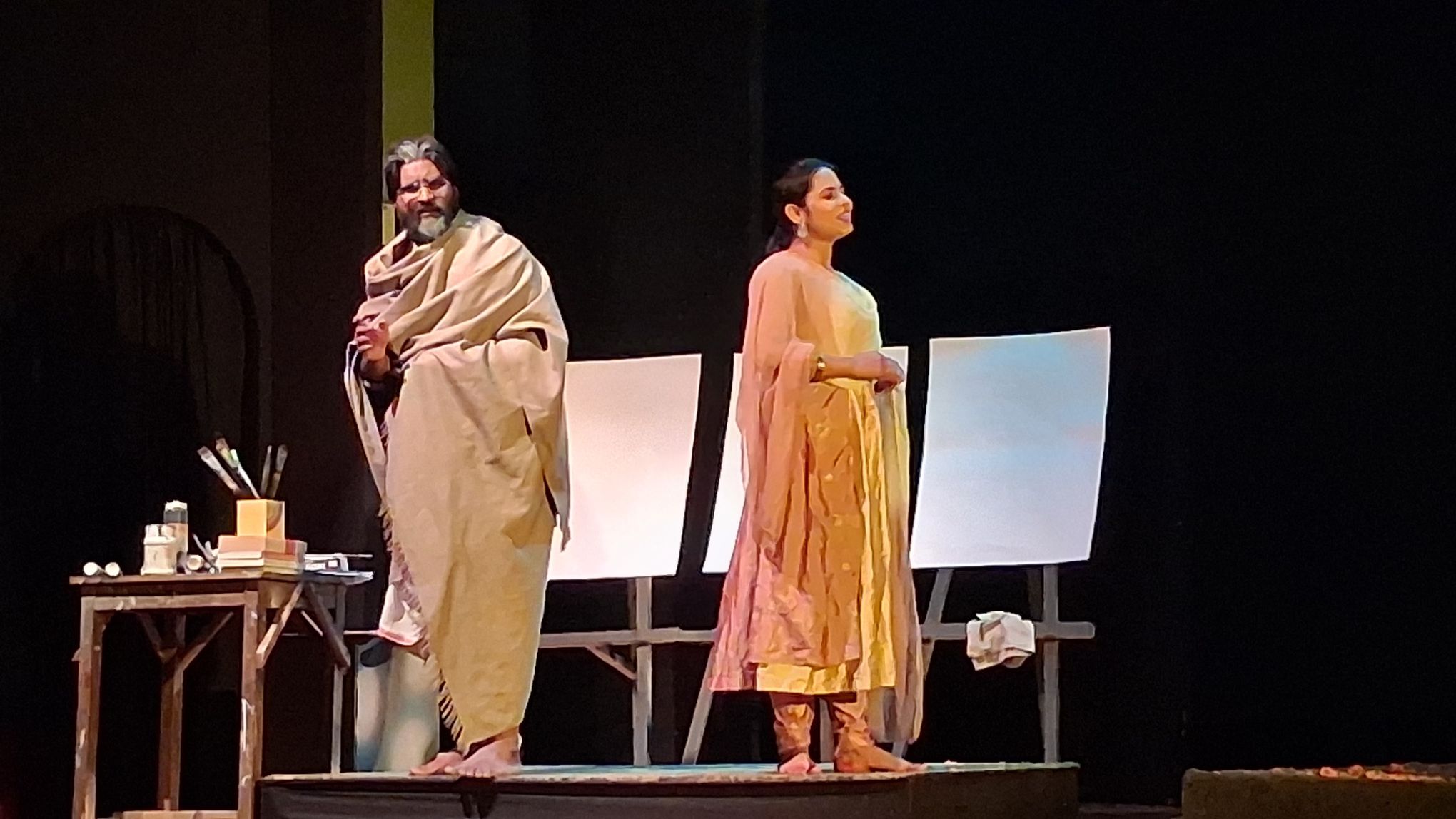
Days turn into weeks, yet Chitrasena fails to paint even a single portrait. During this period, he meets Kalpana, who gradually narrates to him the stories of three historical royal women—Madhavi from the Mahabharata era, Krishnakumari, the princess of Udaipur, Mewar in the 18th century, and Maktadei, the beloved queen of the 16th-century Khordha king Purushottam Dev.
Subsequently, one by one, each princess emerges from the canvas and narrates her own life story sacrifice.
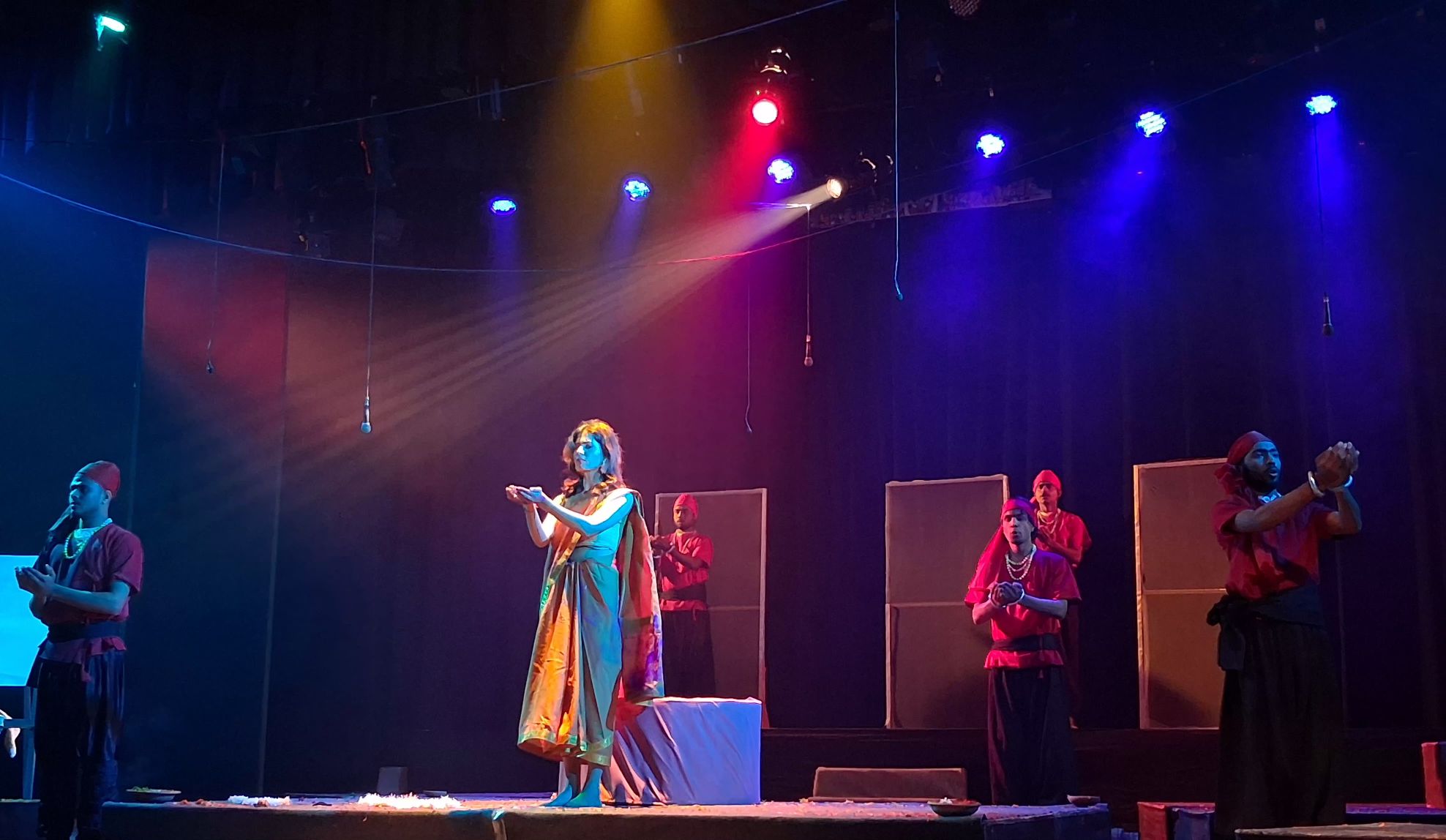
Madhavi narrates her tragic fate at the hand of destiny. Her father King Yayati, who is known for his generosity, hands her over to Galav, who promises to give a steed of 800 rare Shyam Karna horses as ‘Guru Dakshina’ to his guru sage Vishwamitra. Knowing that Madhavi possesses renewable virginity, the king allows Galav to sell Madhavi as many times as he wishes, till he gathers 800 horses. The episode vividly captures Madhavi’s emotional torment as she is passed from one ruler to another before finally reaching Vishwamitra. Rupashree Panda delivered a stirring performance, lending depth and dignity to the character.
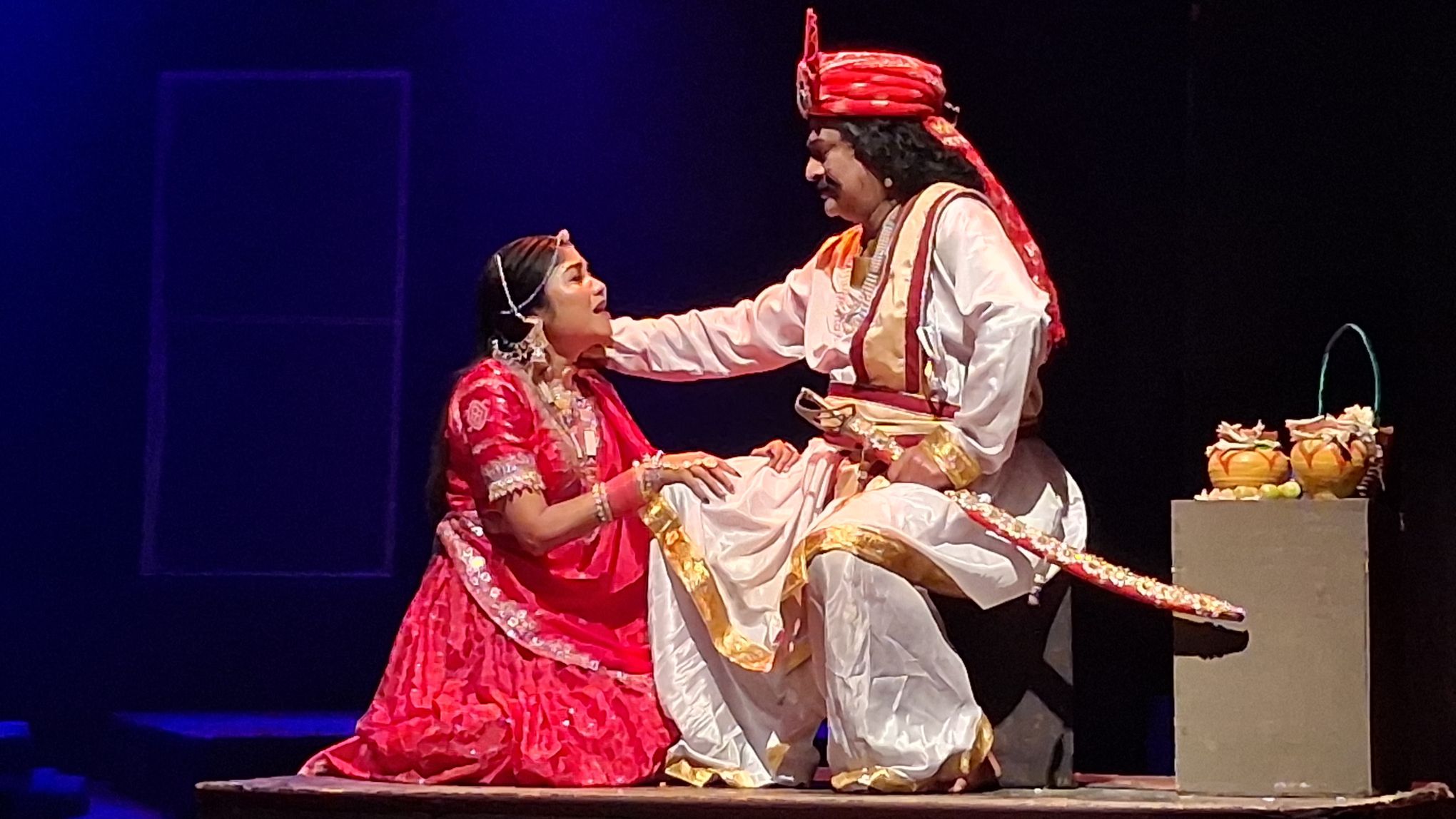
The narrative then shifts to Krishnakumari who describes how she has to end her life to save her motherland. Married at the age of five to Bhim Singh, he beauty later became the cause of rivalry between the kings of Jodhpur and Jaipur, both laying claim to her hand. RRealsing that her existence could plunge Mewar into war, Krishnakumari chooses death over bloodshed. Ishu Madhspriya’s portrayal left the audience spellbound, capturing both vulnerability and resolve with remarkable finesse.
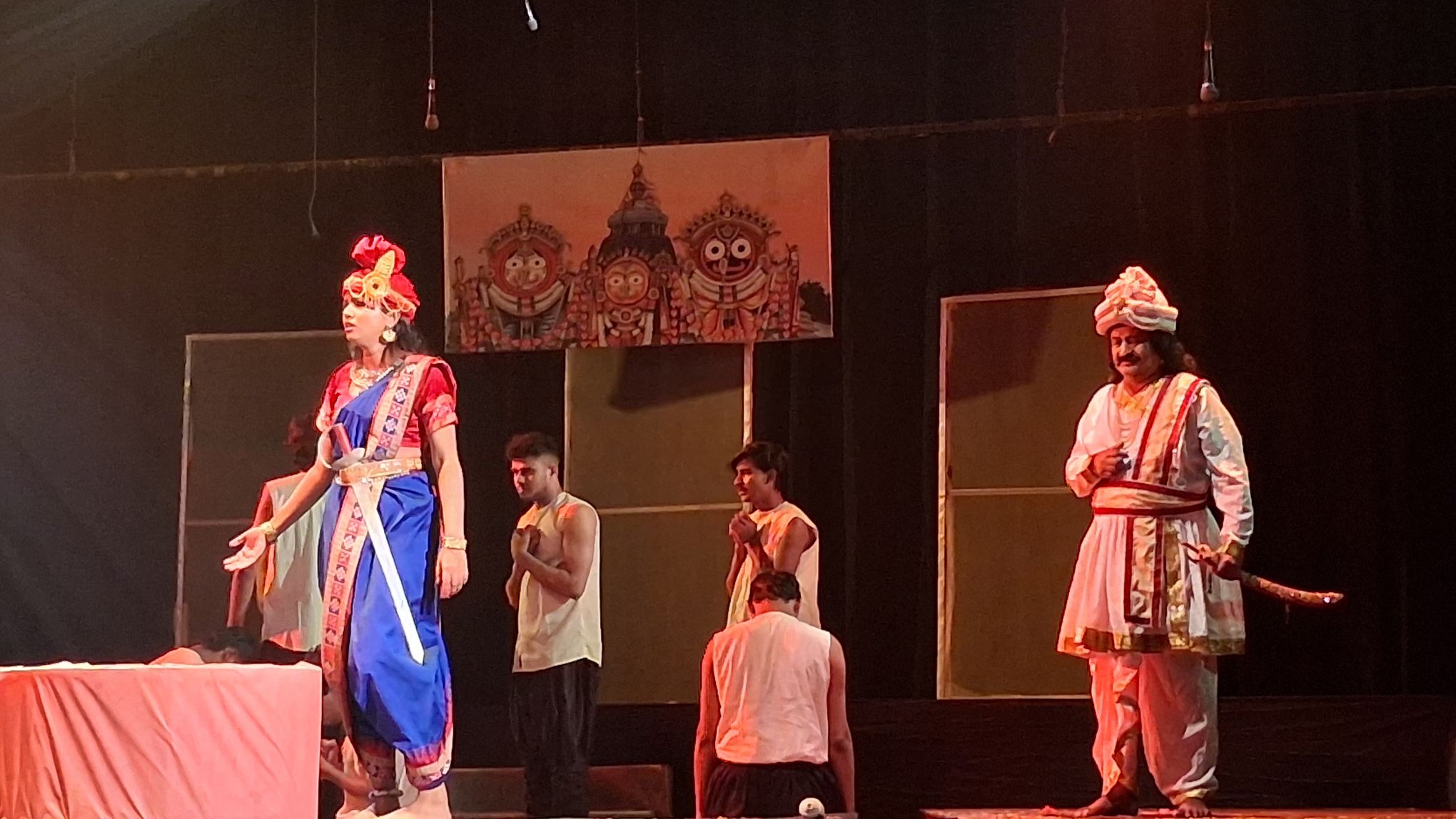
In the final segment, Muktadei recounts perhaps the most painful sacrifice of all—being offered by her father, King Purushottam Dev, to the Mughal emperor in Delhi to protect the sanctity of the Jagannath Temple in Puri from desecration. Diptimayee brought immense emotional weight to the role, holding the audience in rapt silence.
The play ends with on a haunting note. Chitrasen, unable to complete the paintings even though the deadline ends and ultimately, accepts defeat. overwhelmed by the depth of suffering and sacrifice borne by these princesses, he walks away, acknowledging that some pain is too profound to be captured on canvas.
Rajajema left the audience deeply moved, reminding them of the often-unheard voices of history and the quiet heroism of women whose sacrifices shaped kingdoms and faiths alike.
While almost all the artistes were the participants of Uttara Purusha’s workshops held in the last year, Debadatta Pati could manage to get the best out of them. His deft direction made the play enjoyable.
Light design and music always play a vital role in creating the required moods on the stage. Here, I found the light design passable.
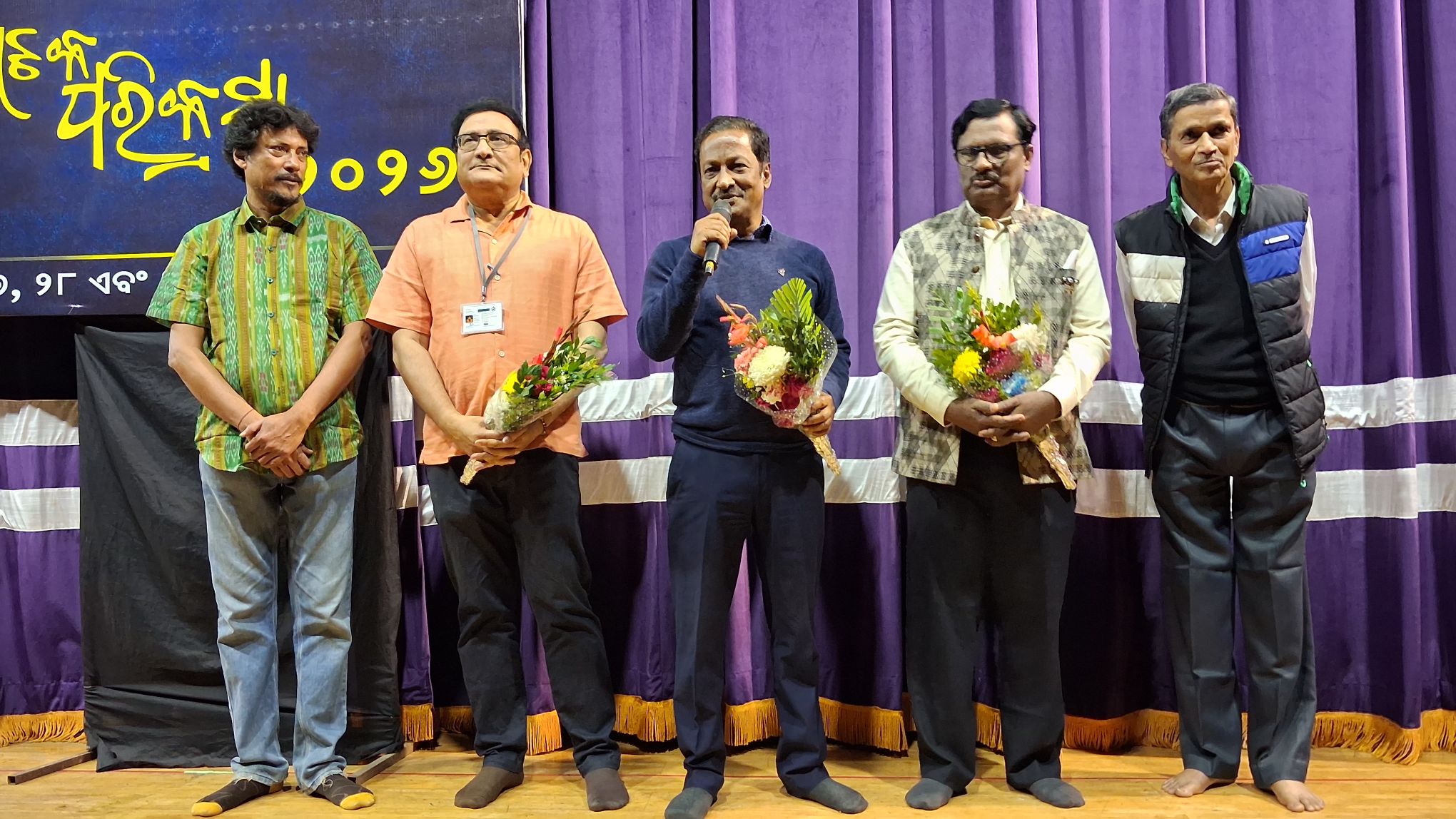
The evening was graced by distinguished personalities including Special Secretary of Culture Department Debaprasad Das, Chief Information Commissioner Manoj Kumar Parida and eminent litterateur Dr Gourahari Das.
On the stage:
Laxmi Narayan Acharya, Sai, Soumya, Rajat, Amlan, Stalin, Bharat, Divya, Manoranjan, Sangeeta, Sheetal, Rupasri, Deepti, and Ishu
Off the stage:
Lyrics: Sumit
Music & Vocals: Sheetal
Costume Design: Mama
Lighting: Rakesh Satapathy
Rhythm: Pratap Rout
Music Direction & Co-direction: Gaurab Panigrahi