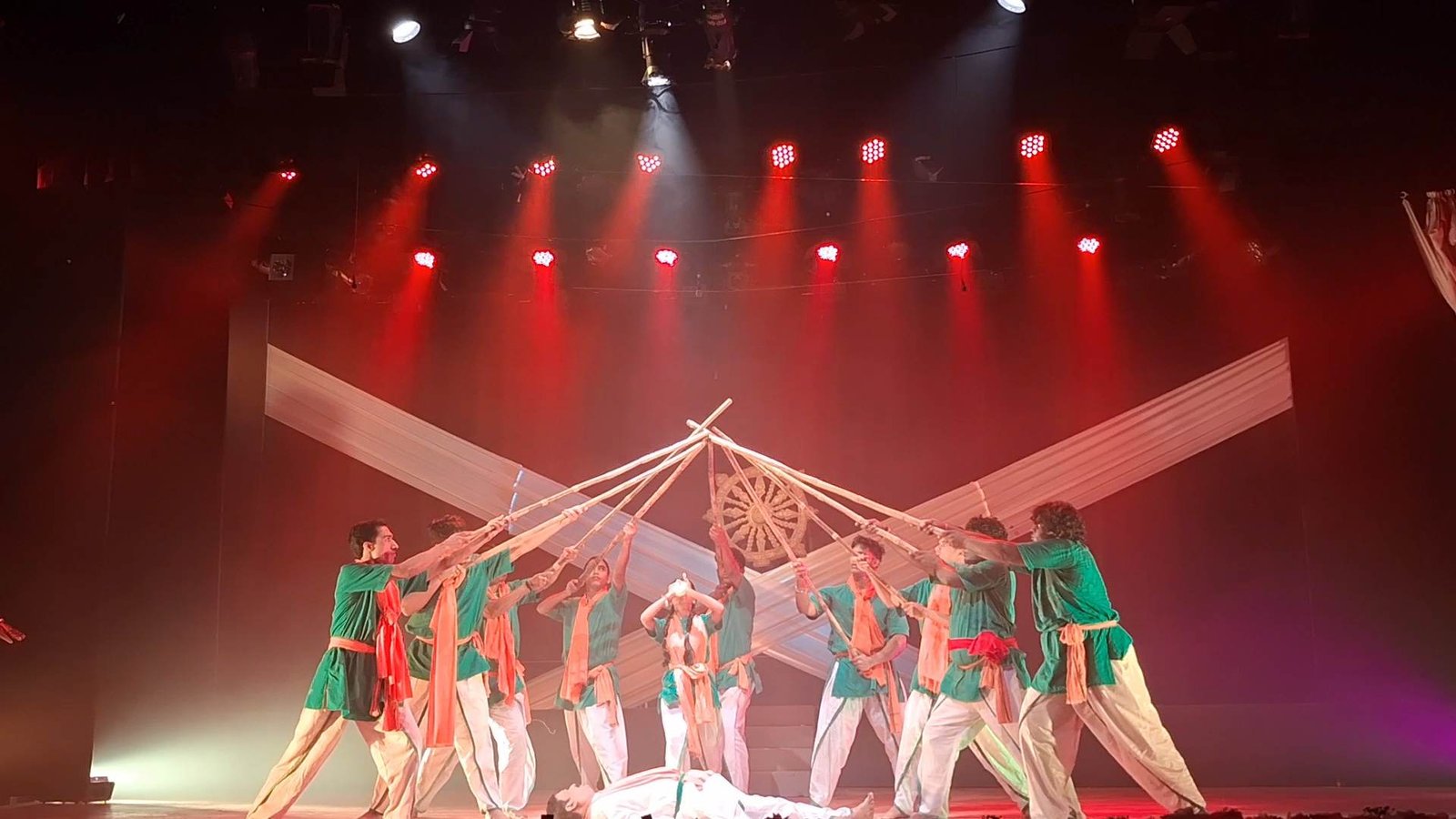
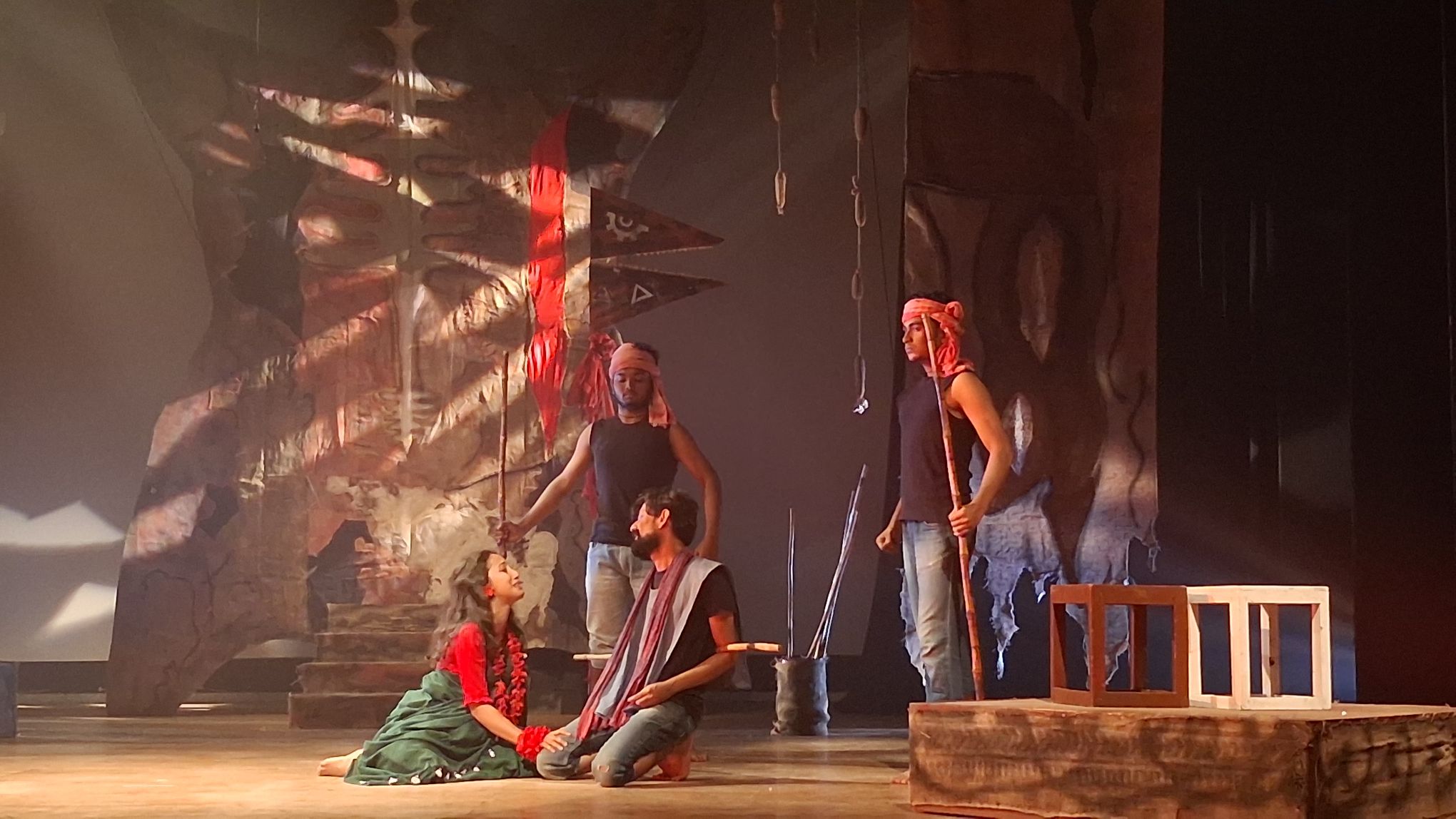
Bhubaneswar: The curtains came down on the five-day National Theatre Festival, organized at Rabindra Mandap here by Bidyakanak Srujananusthana, a city-based socio-cultural organization, on Wednesday but not before leaving theatre lovers enthralled with a stirring performance of Rabindranath Tagore’s timeless classic ‘Raktakarabi’.
The production was staged by Sarabhuj Theatre Group, West Midanapur, West Bengal. The evening was graced by dignitaries like eminent theatre personalities Lalatendu Rath and Fakir Singh and Rotarian Arati Biswal, who inaugurated the programme by lighting the auspicious lamp. The host group’s president Sudhakar Patri and secretary Subhakanta Padhi were also present of the dais.
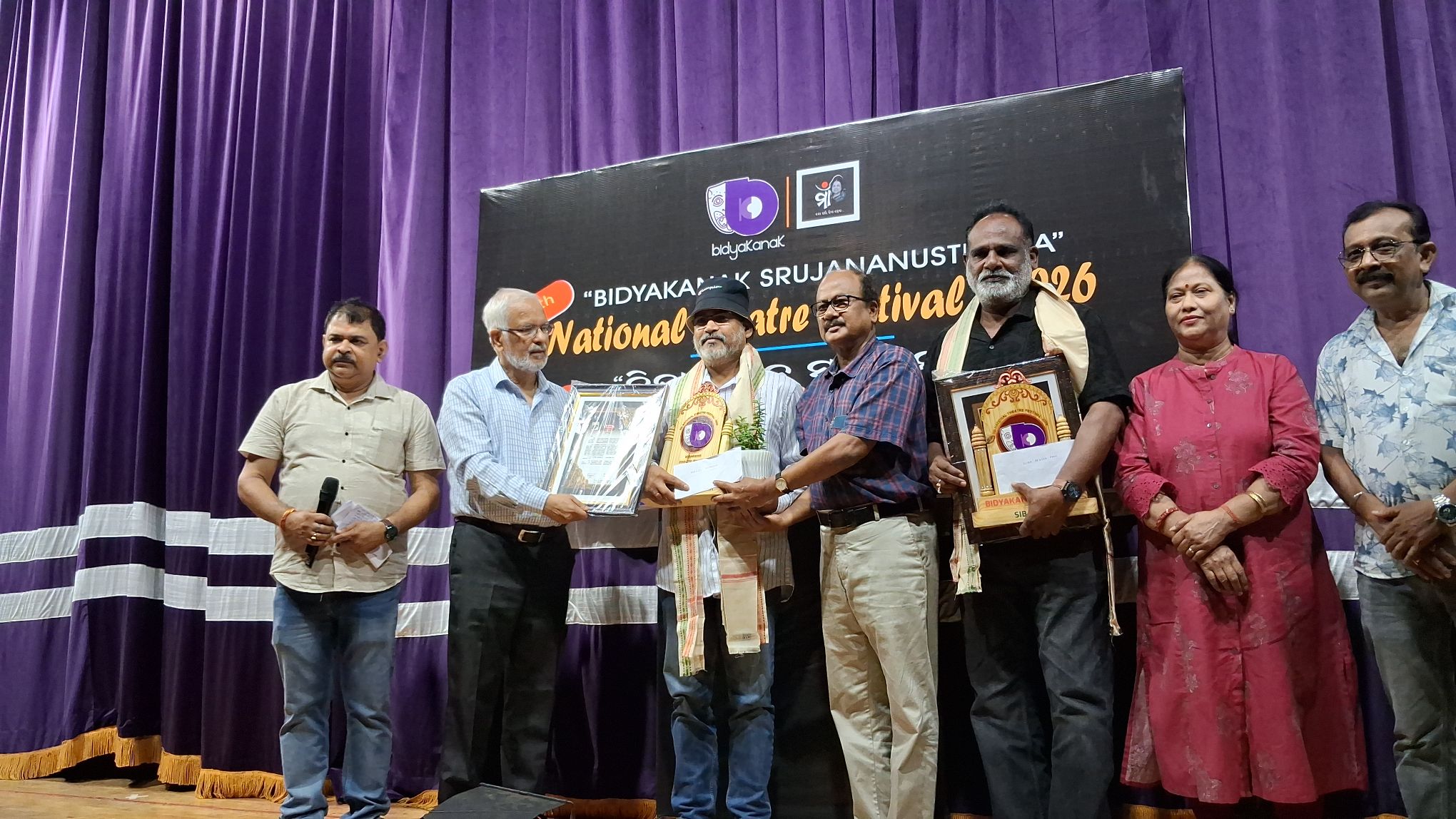
The spotlight was then shifted to the felicitation ceremony. Actor and director Siba Prasad Rath of Koraput and Odisha’s first of its kind art and culture web magazine Kalasanskruti’s founder and editor-in-chief Pradeep Pattanayk were awarded with ‘Bidyakanak Samman’ for their immense contribution to the art world.
Putting an end to the theatre lovers’ long wait to witness ‘Raktakarabi’, the screen parted to reveal the grim world of Yakshapuri-a town swallowed whole by greed and mechanised oppression.At the heart of the story stands the unseen King, who represents enormous authority but barricades himself behind an iron curtain. He transforms Yakshapuri into a fort where human beings are reduced to cogs in a machine, endlessly digging for gold in suffocating darkness.
In this soulless world, people lose connections with the beauty of nature, compassion and humanity. Then enters Nandini, bringing a breath of fresh air. She arrives in Yakshapuri in search for her love, Ranjan. She wears jewels made from red oleanders as a token of love and hope.With her arrival, the lifeless town comes alive. Unlike the others, she refuses to bow down to tyranny and gradually awakens the miners’ long-buried yearning for dignity and freedom.
Nandini’s fearless presence shakes the very foundations of his world, forcing him to confront the cruelty and emptiness of the system he has built.As the pace gathers steam, the pain of the miners and the sparks of rebellion come to focus. Characters like Ranjan and Bishu emerge as symbols of courage, humanity, and resistance.
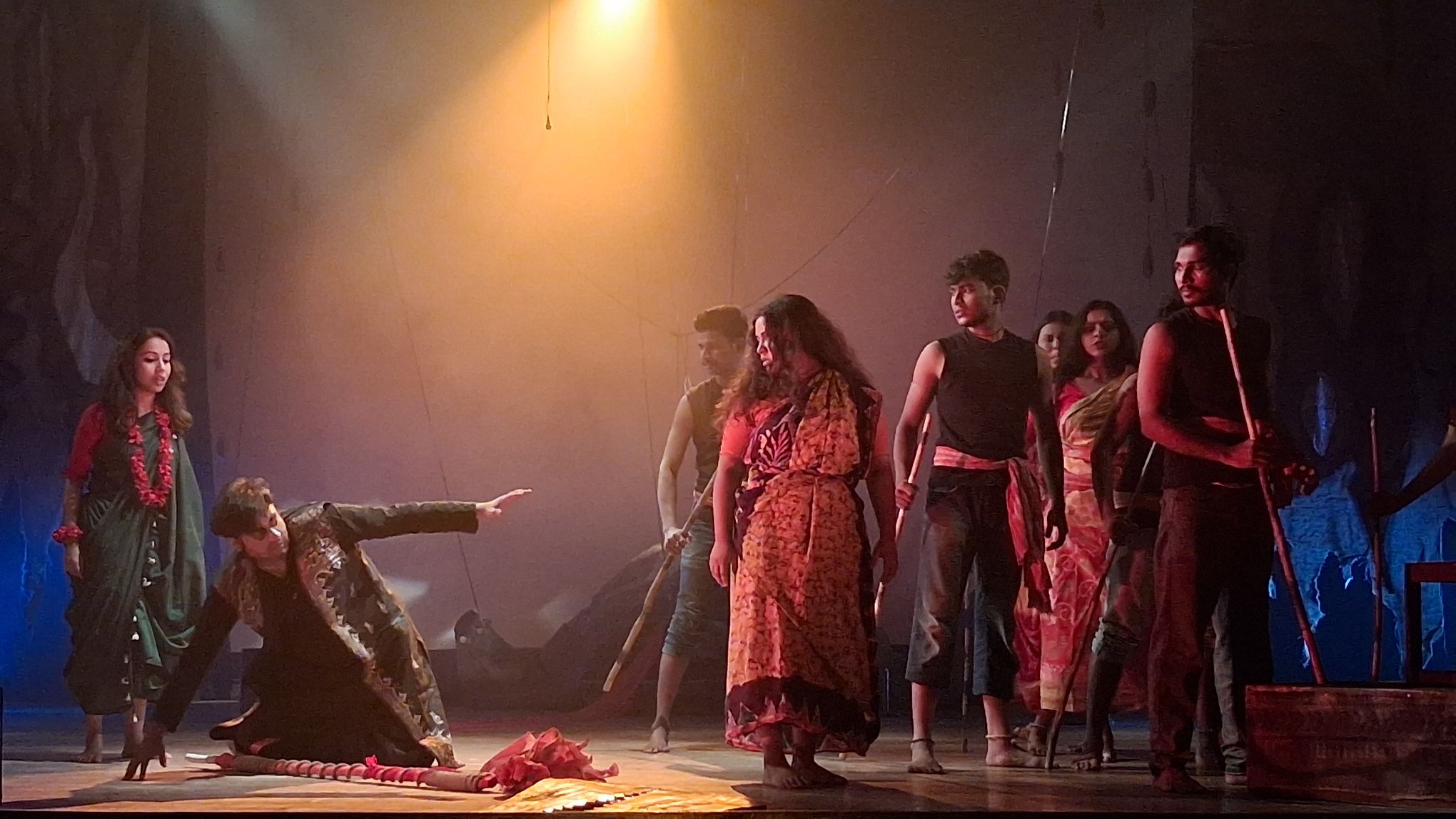
The clash between love and greed, power and freedom, ultimately drives the play toward sacrifice, awakening, and ultimately the hope of liberation.Through poetic symbolism and powerful imagery, Raktakarabi criticizes exploitative industrial systems and the dehumanizing effects of unchecked power.
At the same time, the play celebrates the enduring strength of love, human connection, and the longing for a freer and more compassionate world relentless pursuit of material wealth and mechanical power separates humanity from its true essence.
Despite the play’s reputation for being difficult to stage, director Tarun Pradhan handled the complex narrative with remarkable ease and finesse. His deft direction, coupled with all the actors’ compelling performances, kept the audience glued to their seats throughout.
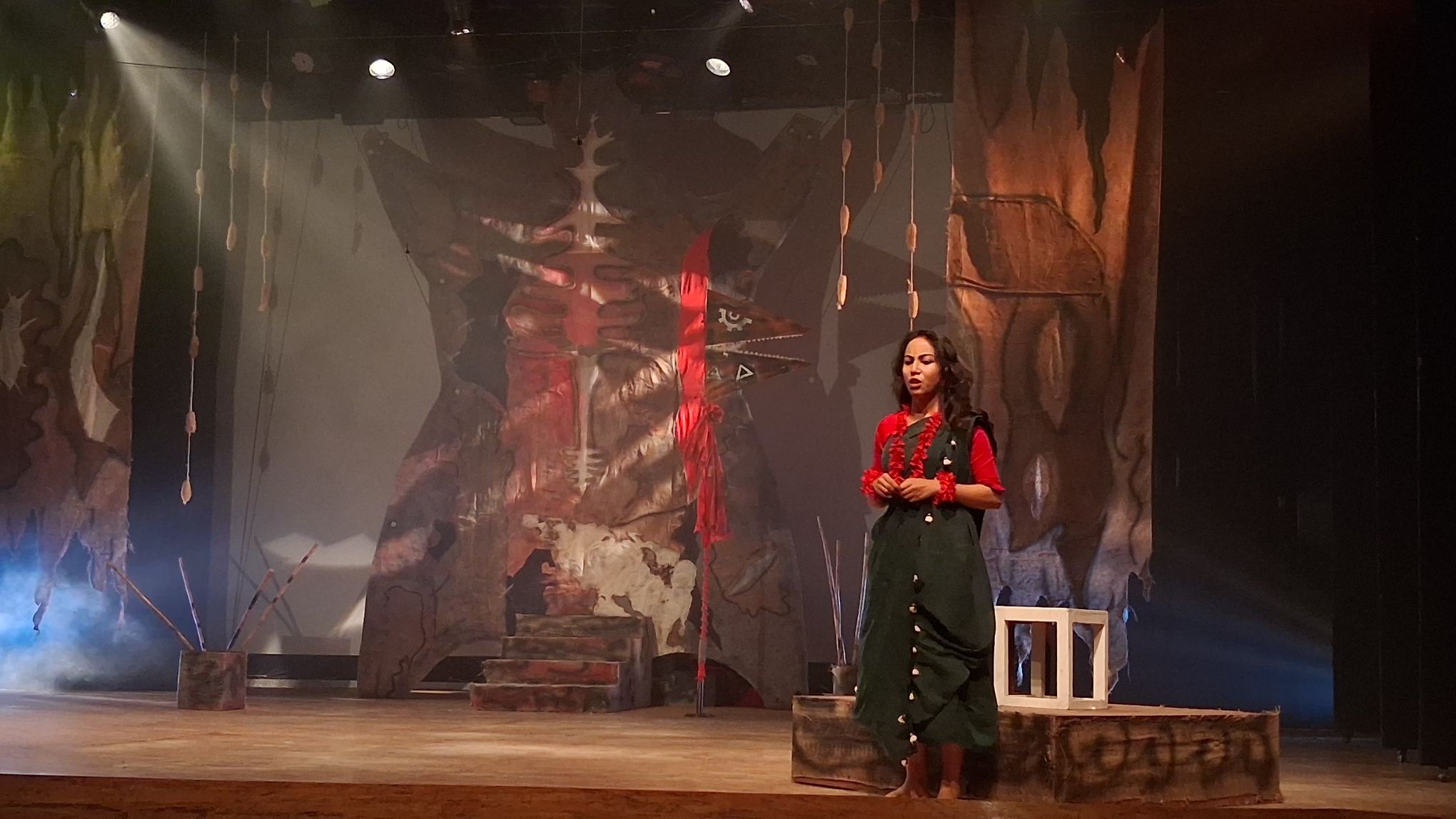
Bipasha Das shone brightly as Nandini, bringing the iconic character alive with grace and emotional depth, as though she had stepped straight out of the pages of the Bard of Bengal’s manuscript.
The evocative music composed by Anirban Sarkar and Sayanti Ghatak struck all the right chords, while Dhanapati Mandal’s imaginative lighting design elevated the production several notches higher.
Off the stage:
Stage Design: Anirban Sarkar, Suvojit Paul and Joy Prakash Roy
Music Design: Anirban Sarkar
Light Design: Dhanapati Mondal
Costume Design: Sayanti Ghatak
Make Up: Sanjoy Paul
Choreography: Sutapa Awon Pradhan
Concept, Edit and Direction: Tarun Pradhan
On the stage:
Nandini: Bipasha Das
Bisu Pagol: Shovon Chakraborty
Sardar: Shankhadip Chakraborty
Chandra: Rupkatha Ray
Fagulal: Rohan Patra
Morol: Fatik Midya
Kisor: Pranay Naskar
Aydhapok: Subhajit Karmakar
Raja: Souvik Sarkar
Chorus team: Anjan Mahato, Sheuli Das, Tulika Bhattacharya, Sayan Rong, Pijush Roy, Tarashankar Khara and Shayari De
Since its inception in 2015, ‘Bidyakanak Srujananusthan’ has carved a niche in Odisha’s cultural calendar. Besides its National Theatre Festival in May, it hosts a theatre festival-like event in September every year, and musical soirees on January 1 and July 4.