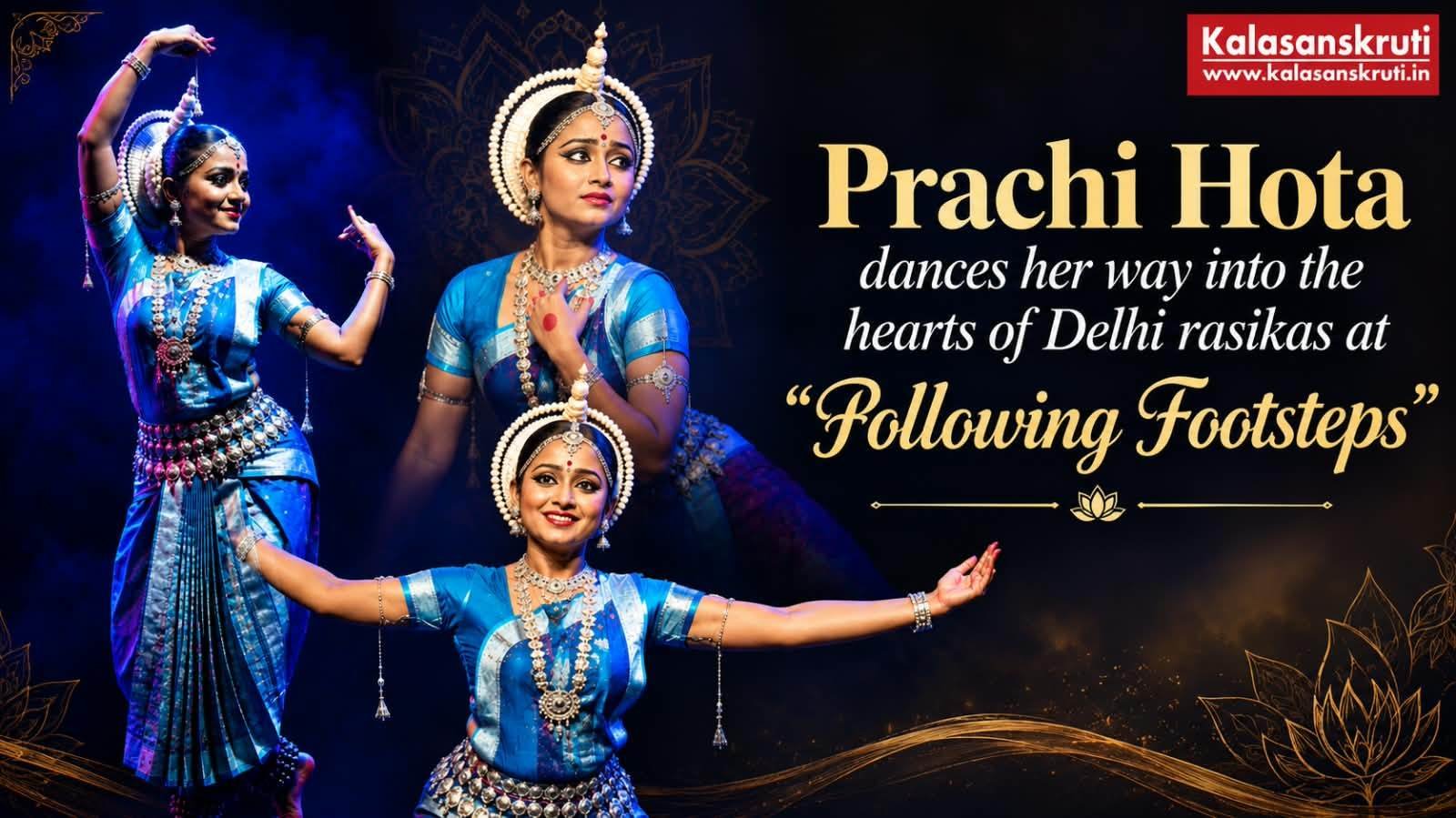
New Delhi: It was October 10. With the CJP’s massive protest keeping the city on edge, New Delhi was virtually turned into a fortress with heavy deployment of police forces to maintain law and order.
Public movement was restricted, and navigating the city was anything but a cakewalk.The same day, an entirely different scene unfolded at Kathak Kendra, San Martin Marg, Chanakyapuri, New Delhi.
Braving the disruptions and inconvenience, rasikas in good numbers arrived at the said venue. They were there to witness a performance by one of the country’s finest young Odissi dancers, Prachi Hota.
The programme was titled ‘Following Footsteps’, the fifth edition of the series.
True to its commitment to respecting the audience’s time, the event began punctually at 6.30 PM. Celebrated anchor Sadhna Shrivastav appeared on the stage, and, in her characteristic, mellifluous voice, informed the evening’s offerings, setting the mood for what promised to be an captivating artistic experience.
Soon, the evening proceeded towards the inauguration ceremony. Distinguished guests including Guru Kavita Dwibedi, Guru Sharon Lowen, senior advocate, human rights proponent and author Sri Ashok Panda, senior journalist and foreign affairs analyst Sri Bhabani Dikshit lit the auspicious lamp.
The spotlight was then shifted to the evening’s star attraction, Prachi Hota.
Bestowed with a chiseled body, radiant countenance and expressive eyes, Prachi possesses the attributes of a natural performer. What sets her apart is her meticulous command over the art form, and her ability to fashion striking sculptural poses.
Her tryst with dance began remarkably early. At the tender age of three, when most children love to play with toys, she got attracted towards the tinkling sound of ankle bells. That early fascination soon blossomed into a lifelong passion.
Her initial training started under the watchful eyes of acclaimed Odissi dancer, Guru Smt. Arpita Venkatesh at Kolkata. After shifting to Delhi, in 2004, she continued her training under Guru Shri Hare Krishna Behera and remained under his tutelage for nine years.Following Guruji’s ill-health and subsequent demise, she pursued her training under Guru Smt. Y Asha Kumari and is still learning from her.
She has also benefited from the guidance of eminent gurus like Aruna Mohanty, Kumkum Mohanty and Kavita Dwivedi.
With 26 years of training behind her and 17 years of professional performance experience, Prachi has steadily carved out a place for herself in the world of Odissi.
She commenced her recital with ‘Navadurga’, a Mangalacharan, set to Raga Bhairavi and Tala Jati and choreographed by Adiguru Pankaj Charan Das.
The choice was appropriate as the day marked the first day of Mahalaya, an occasion steeped in devotion and anticipation of the worship of the Divine Mother. The piece explored different aspects of Goddess Durga, allowing Prachi to establish an immediate rapport with the audience.
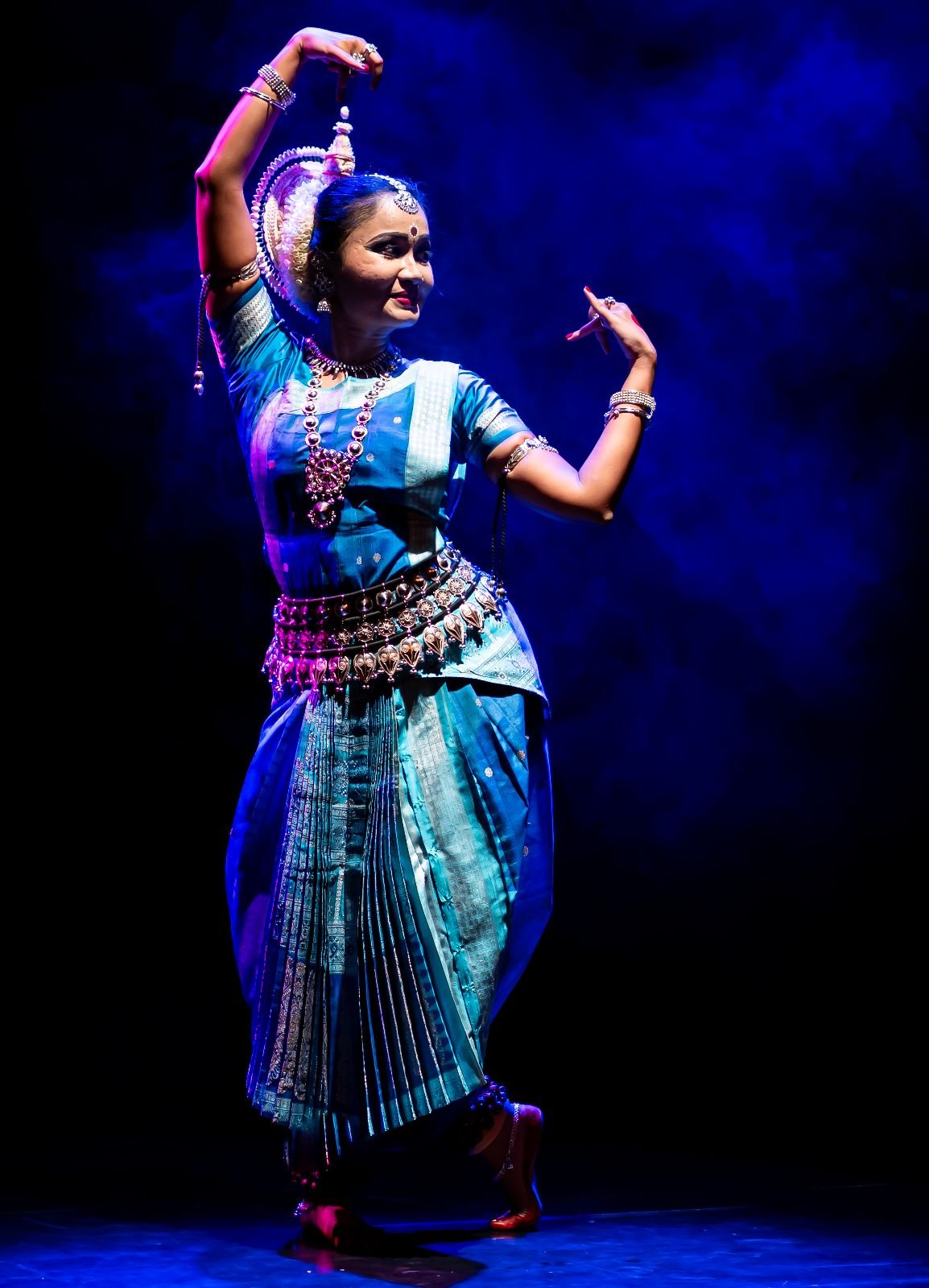
From the very beginning, she confidently and neatly crafted her poses showcasing her complete command over the art form, setting the tone for the rest of the evening. Her movements were crisp, her lines well-defined, and her expressions imbued with devotional fervour.
Her next presentation was ‘Pallavi’, set to Raga Hansadhwani and Tala Tisra Triputa and choreographed by Guru Shri Hare Krushna Behera.
A demanding item in the Odissi repertoire, Pallavi is a pure dance where a raga is elaborated with intricate and rhythmic footwork, lyrical body movements and graceful choreography and is always a challenge for a dancer. It calls for not only technical finesse but also stamina, musical sensitivity and an impeccable sense of timing. Here too Prachi ticked all boxes of a captivating performance.
She left no stone unturned in bringing out the composition’s intricate beauty, striking a fine balance between rhythmic complexity and effortless grace.
The mood shifted from pure dance to expressive storytelling with ‘Dheera Sameere’, an abhinaya from Jayadeva’s 12th-century Sanskrit masterpiece, the Gita Govinda. Set to Raga Kalyaan and Tala Ektali and choreographed by Padma Vibhushan Guru Kelucharan Mohapatra, the piece came as an opportunity for Prachi to demonstrate her abhinaya skills.
Her portrayal of sakhi entreating Radha to join Krishna who is waiting for her by the Yamuna through subtle changes in expression, delicate gestures and nuanced body language was nothing short of spellbinding.
She followed it up with another abhinaya ‘Braja Ku Chora’, one of classic choreographies of legendary exponent Guru Kelucharan Mohapatra. Her portrayal of Yoshada cajoling little Krishna to go to sleep and even resorting to the playful threat that a thief might come and carry him away if he refuses to do so a delightful theatrical experience.
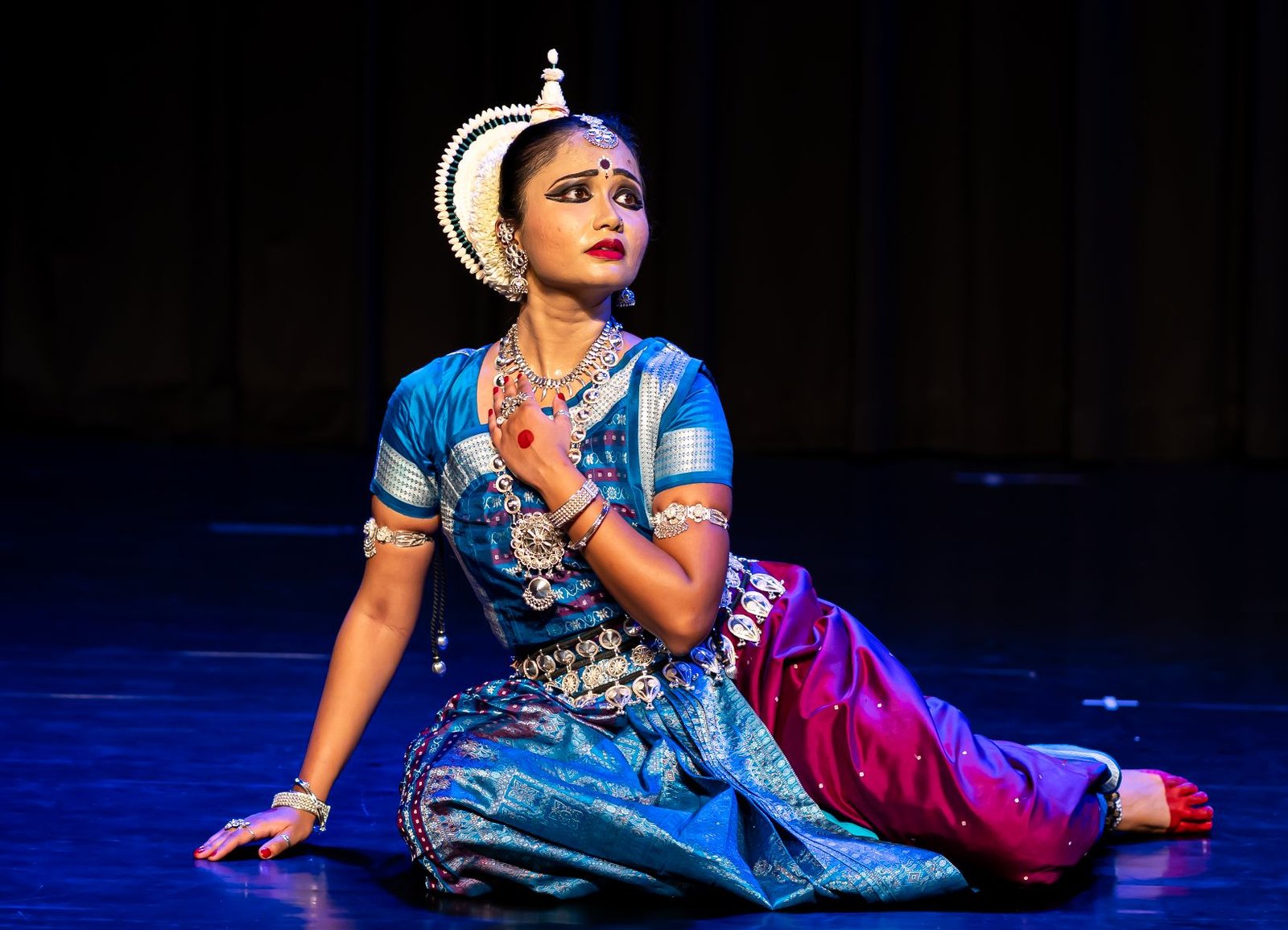
Her switching between ‘Yoshada’ and ‘Krishna’ characters was so deft and clean that the dancer herself seemed to disappear into the narrative and what remained on the stage were only an affectionate mother Yoshada and mischievous Krishna. Here, the Vatsalaya bhava was brought out beautifully, leaving the art lovers totally immersed in the emotion.
The concluding item of the evening was ‘Moksha’, a traditional concluding piece in Odissi repertoire. Choreographed by Guru Kelucharan Mohapatra set to music composed by Pandit Bhubaneswar Mishra in Raga Bhairavi and Tala Ektali, here Prachi surrendered herself completely to the divinity of the dance form.
Here, technique and devotion came together in a seamless whole, making it a visual delight for both trained and untrained eyes and drawing widespread appreciation.
One aspect of Prachi’s performance that deserves special mention is her extraordinary stamina. Apart from command and expressive ability, she has a high level of energy which is no mean feat.
What this reviewer marked was that even after completing the entire repertoire, Prachi’s energy and enthusiasm remained undiminished which is rarely found in a dancer.
She seemed to have as much spring in her step at the end as she had at the beginning—a quality many dancers would envy.
If the huge round of applause and standing ovation at the end of the final recital is any measure of an artist’s success, she had undoubtedly danced her way into the hearts of those present.
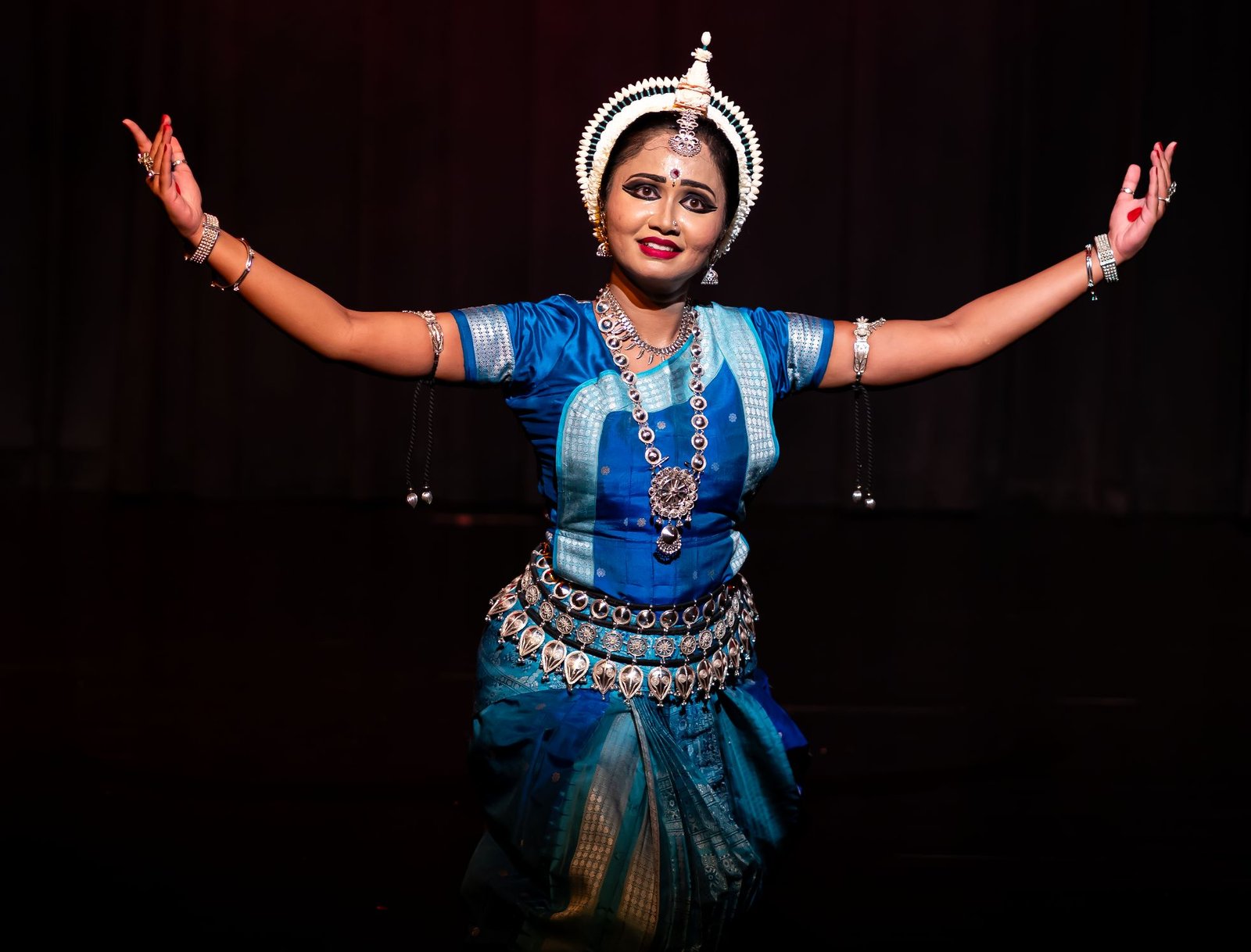
This reviewer is also sure that the sculptural poses Prachi crafted on the stage continued to linger in the audience’s memory long after the curtains came down.Prachi Hota’s artistic journey extends well beyond the dance stage.
A professional artist for the past 17 years and a graded artiste of Doordarshan, Prachi is no stranger to awards and accolades. The honours include the National Scholarship from the Centre for Cultural Research and Training, Government of India, Padmavati Yuva Pratibha Puraskar, Nritya Vilasini, Natya Bhramari, Subhadra Samman, Devadasi Ananyaa Nartaki Puraskar, Natyakala Chathura and Nritya Vidushi from organisations such as the National Culture Mission and the All India Dancers’ Association. These distinctions reflect her sustained commitment to her art.
But Prachi is far from one-dimensional artiste. A trained sitarist, Hindustani vocalist, Prachi is also a filmmaker who has previously received training from the London Film Academy, United Kingdom and Prague Film School, Czech Republic. She holds a Master’s in Filmmaking from the London Film School and has worked across Europe and India. Her latest documentary has been screened at the British Film Institute and was nominated for an award in the Best Short Film category at the Begin Film Festival Los Angeles. She was also one of the first filmmakers in India to get selected for the Documentary Co-Production Market organised by the National Film Development Corporation, Government of India.
Her engagement with the arts extends into education and public discourse as well. She has been associated with ‘Project Anjuman’, as part of which, a set of young and motivated artists conduct workshops in government schools across Delhi to help develop in students the 21st century skills of creativity, collaboration, communication and critical thinking.
She also organises seminars about dance titled ‘Samanubhāsanā – Conversations About Indian Dance’ to offer a platform for dialogue on contemporary issues affecting Indian dance. Prachi is clearly not one to sit on laurels.
She continues to add new feathers to her colourful cap: she is the founder and editor of ‘The Aggressively Serious Newsletter’.
To sum up the evening, Prachi’s ‘Following Footsteps’ recital was more than a demonstration of technical prowess. It was a testament to years of rigorous training, artistic discipline, expressive maturity and an enduring passion for Odissi.