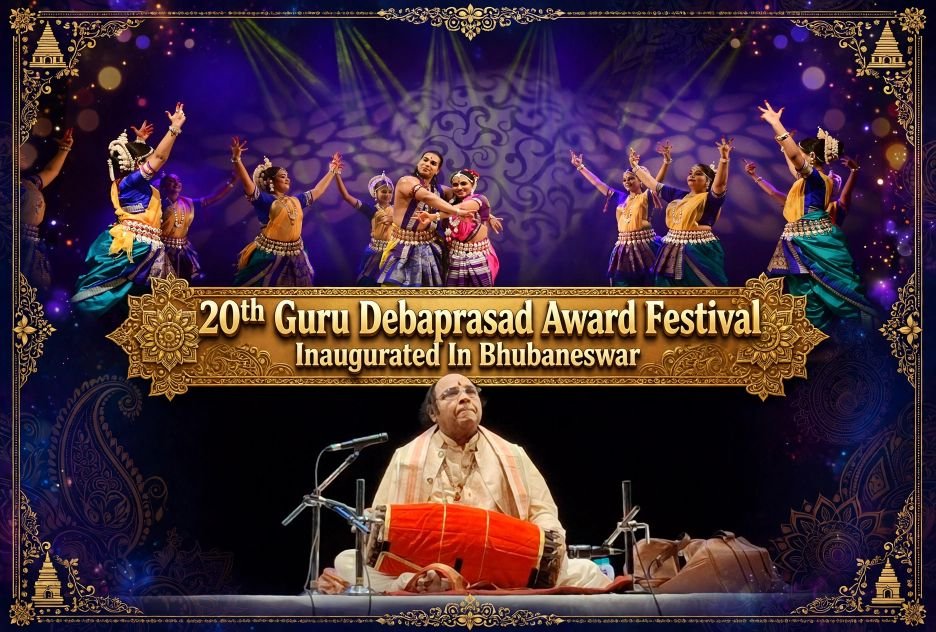
Bhubaneswar: Rabindra Mandap auditorium here came alive with the magic of Indian classical arts as Tridhara hosted its 20th edition of Guru Debaprasad Award Festival on October 22, bringing together the grace of Odissi and the pulsating rhythms of the Mridangam in an evening to remember.
Founded by the legendary Odissi maestro Padma Shri Guru Debaprasad Das, Tridhara is one of pioneering Odissi dance institutions in the country, committed to preserve and promote the rich legacy of the illustrious founder.
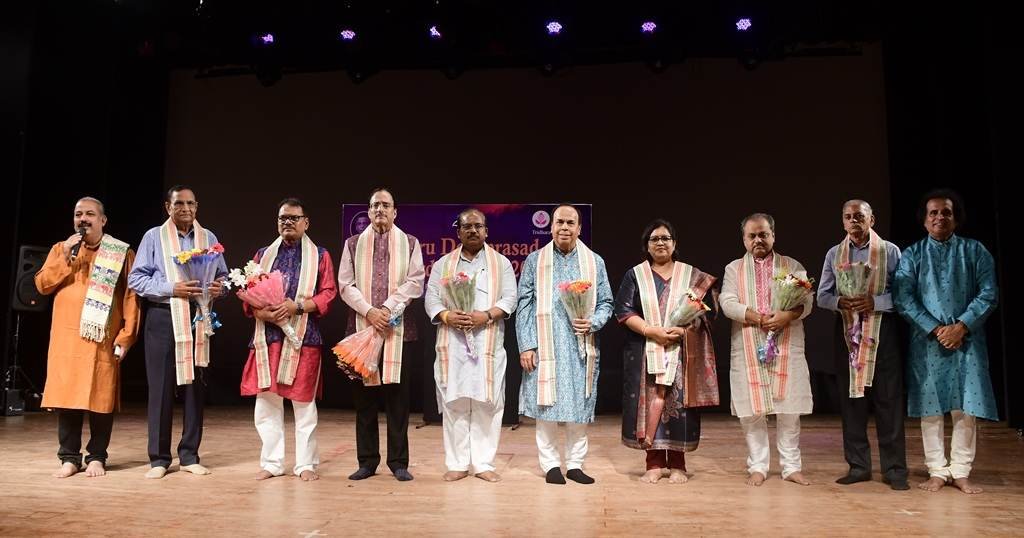
The dignitaries who graced the occasion were Dr. Rabindra Narayan Behera, Jajpur MP; Shri Ashok Kumar Tripathy, former member, Board of Revenue, Govt. of Odisha; Shri Prafulla Kumar Das, Chief Income Tax Commissioner; Shri Surath Biswal, state president, BJP OBC Morcha; Pt. Prasanjit Poddar, founder of Hindustan Art & Music Society; Shri Suresh Chandra Panda, Former CEO, Prasar Bharati and Smt. Suchismita Mantry, Deputy Director, Odia Language Literature and Culture Department. They jointly lit the ceremonial lamp marking the inauguration of the festival. Tridhara’s working president Shri Simanchala Panda and director Guru Dr Gajendra Kumar Panda were also present on the dais.
The evening opened with a captivating note with “Radha Prema Leela”, an Odissi dance production presented by Tridhara artistes.
The production stood out not merely for its artistic finesse but also for its attempt to breathe new lease of life into an endangered folk tradition of Odisha.
As this reviewer was told, the dance drama draws inspiration from an endangered folk art form of the same name practiced in Ganjam district. At present, Guru Yudhisthira Pradhan, the lone surviving practitioner of the art form, is struggling to keep this traditional art form alive.
If the production succeeded in bringing the folk art form to the stage, much of the credit goes to Guru Dr Gajendra Panda and his team. The painstaking research that went into the production was evident in its thoughtful presentation.
Adapted by Dr Shyantanu Rath and choreographed by Guru Dr Gajendra Panda, the production featured music composed by Guru Gopal Chandra Panda and his daughter Smt Sangeeta Panda, rhythm composed by Guru Satchidananda Das.
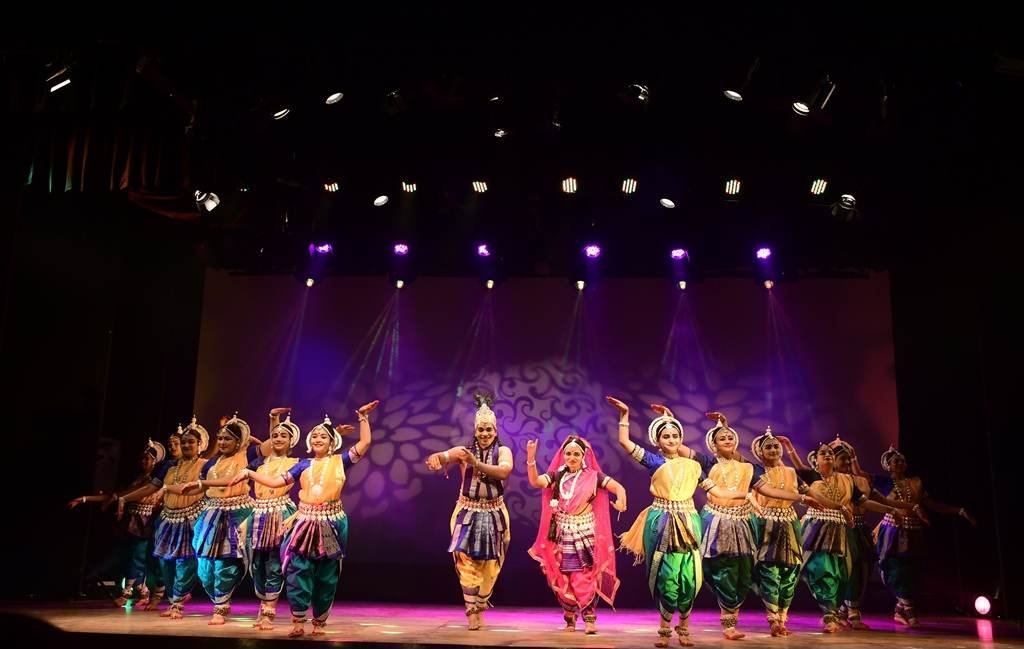
The piece revolved around Krishna, who goes to Chandrabali’s kunja while Radha waiting for him. When he returns, Radha finds telltale signs of his time spent with Chandrabali and refuses to entertain him. Undeterred, Krishna resorts to a series of disguises in an attempt to win back her affection. He appears as a a flower seller, bird seller and a hermit. The narrative eventually moved towards reconciliation, culminating in a joyous dance featuring Krishna, Radha and the gopis.
The moments particularly when Krishna takes the form of a flower seller, bird seller and hermit were well executed on the stage.
The artistes brought the scenes to life with convincing expressions and graceful movements, keeping the audience engrossed. Light design by Bikash Pradhan needs mention.
The artistes were Prabhutosh Panda (Krishna), Mokshada Tripathy ( Radha), Ramakanata Sahoo (Sutradhar), Sukalyani Panda (Sutradhar), Shreya Sradhanjali Das (Flower Seller), Lity Manisha (Bird Seller), Dipika Priyadarsini (Lalita), Rutuja Mohapatra, Tanisha Mohanty, Tanisha Beborta, Ankita Sahoo, Sibani Behera, Monalisha Moharana, Sulagna Patnaik, Dibyashree Kar and Sikhyansi Kuanar
In the second and concluding half, a pleasant surprise came in the form of 83 year old Padma Shri Dr Yella Venkateshwar Rao, an eminent Mridangam maestro.
His solo Mridangam recital proved to be a masterclass in rhythm and virtuosity His solo recital was nothing short of electrifying.
A Guinness Book Record holder for continuously playing Mridangam for 36 hours, the veteran percussionist demonstrated that age had done little to dim his musical brilliance.
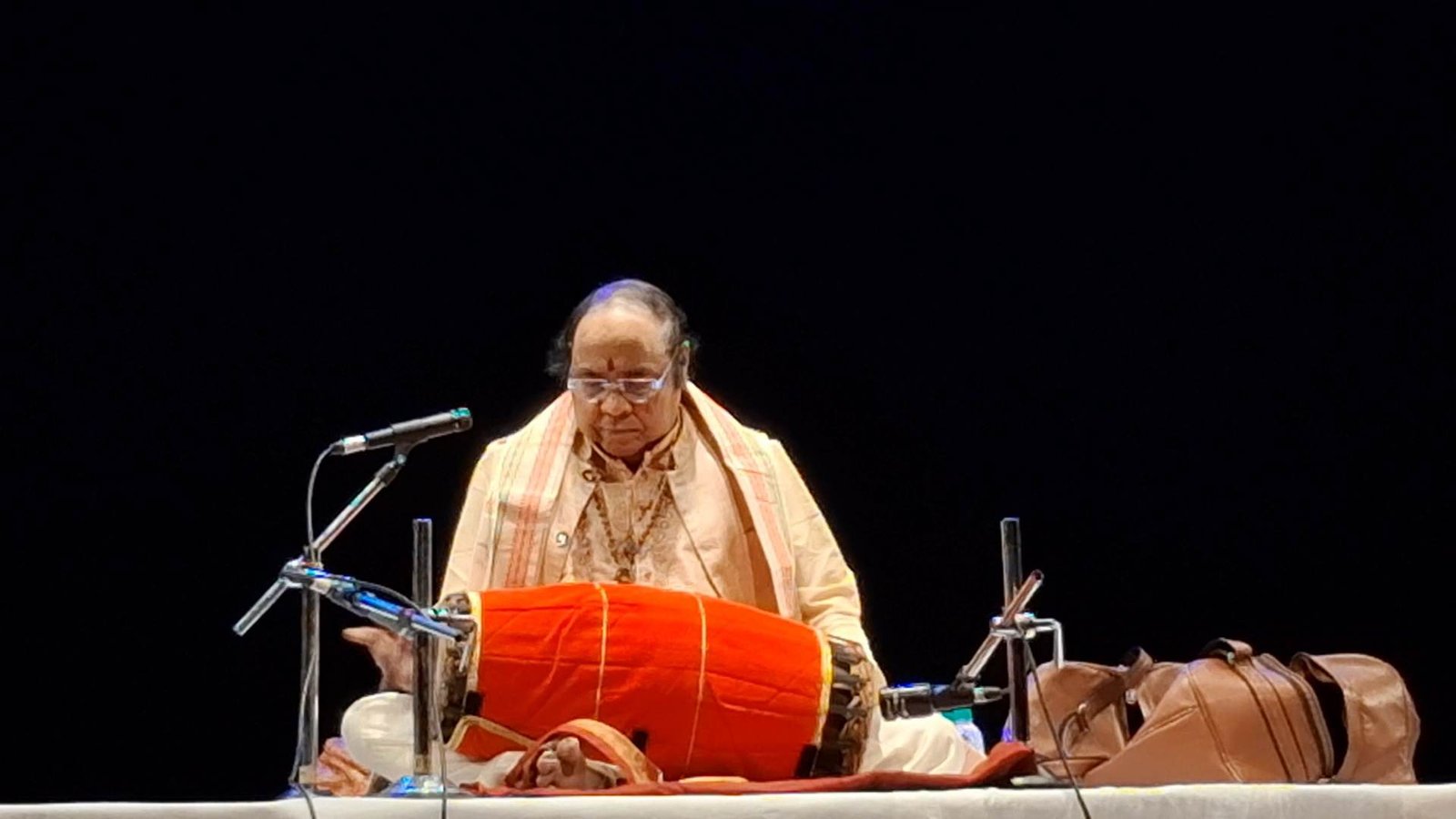
He explored Kalyani Raga through rhythmic cycles of three, six and nine, followed by 16 and 32 matras, displaying his extraordinary virtuosity and dexterity. His fingers danced across the drumheads, weaving magic that held the audience spellbound.
He concluded his recital with a jugalbandi, between the bols he vocalised and the corresponding percussion patterns, adding another layer of excitement to an already riveting performance.
The art connoisseurs, who remained transfixed to their seats throughout his 45-minute-long concert, responded with a spontaneous standing ovation—a fitting tribute to a musician whose mastery of rhythm continues to inspire.
The two performances left a lasting impression on the audience.
The festival is being organised in association with Odia Language, Literature & Culture Department, Government of Odisha.
Dr Mrutyunjay Rath was the anchor of the evening.
Photo courtesy: Tridhara