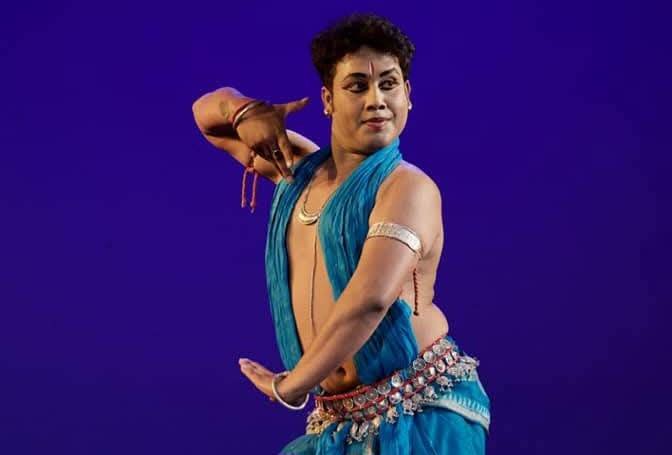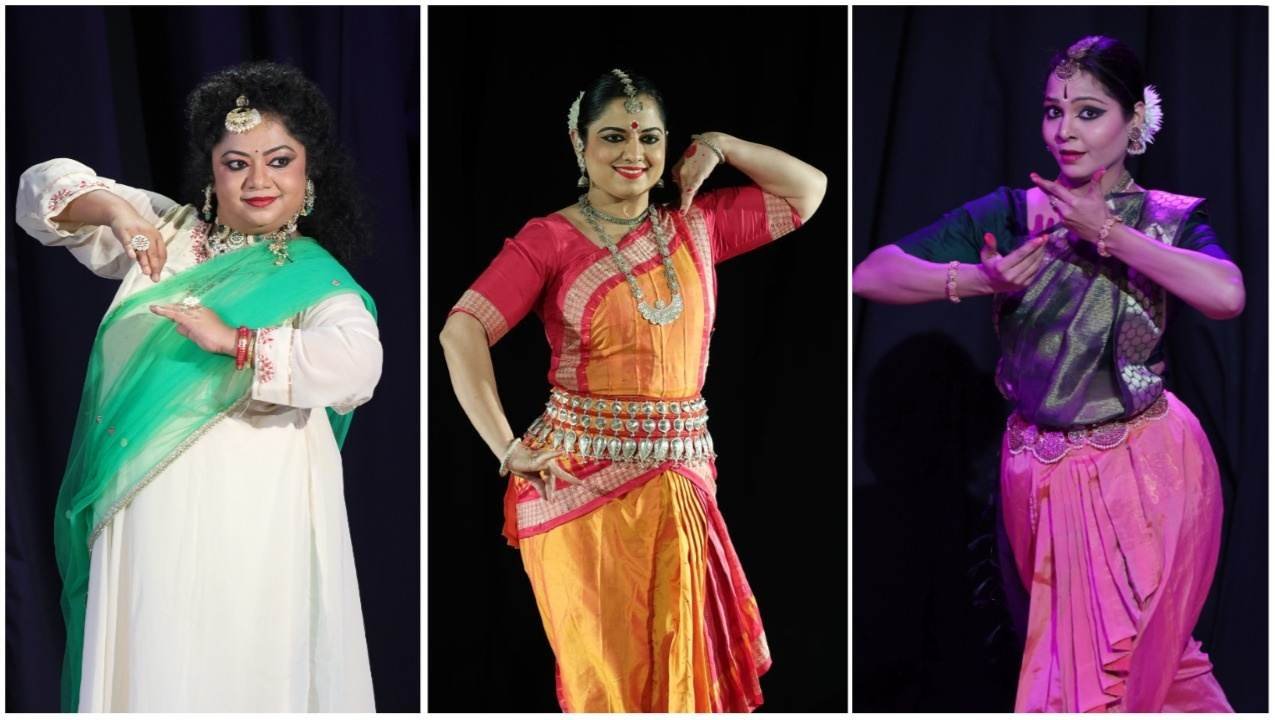
New Delhi: Launched in 2019, Aarohan, a national-level talent hunt organised annually by Kala Kalp Sanskrutik Sansthan, a Gurugram-based cultural body, founded by eminent Odissi dancer Dr (Ms) Atasi Misra, has over the years carved a niche for itself as one of the country’s much-awaited platforms for young performers.
The 2026 edition held at Andhra Pradesh Bhawan Auditorium, 1 Ashoka Road, New Delhi on August 30 unfolded as India’s rich tapestry of performing arts coming alive. Around 500 young and emerging participants from across the country taking in part in both offline and online modes.
They apart, distinguished artistes, gurus, academicians, parents and cultural personalities too gathered, celebrating India’s rich artistic and cultural heritage.
With the inspiring message “संस्कार से संस्कृति, संस्कृति से उत्कर्ष”, Aarohan 2026 sought to connect the younger generation with Indian values, traditions and performing arts. More than just a contest, the initiative was conceived as a platform where talent could find recognition, guidance and opportunities to learn and grow.
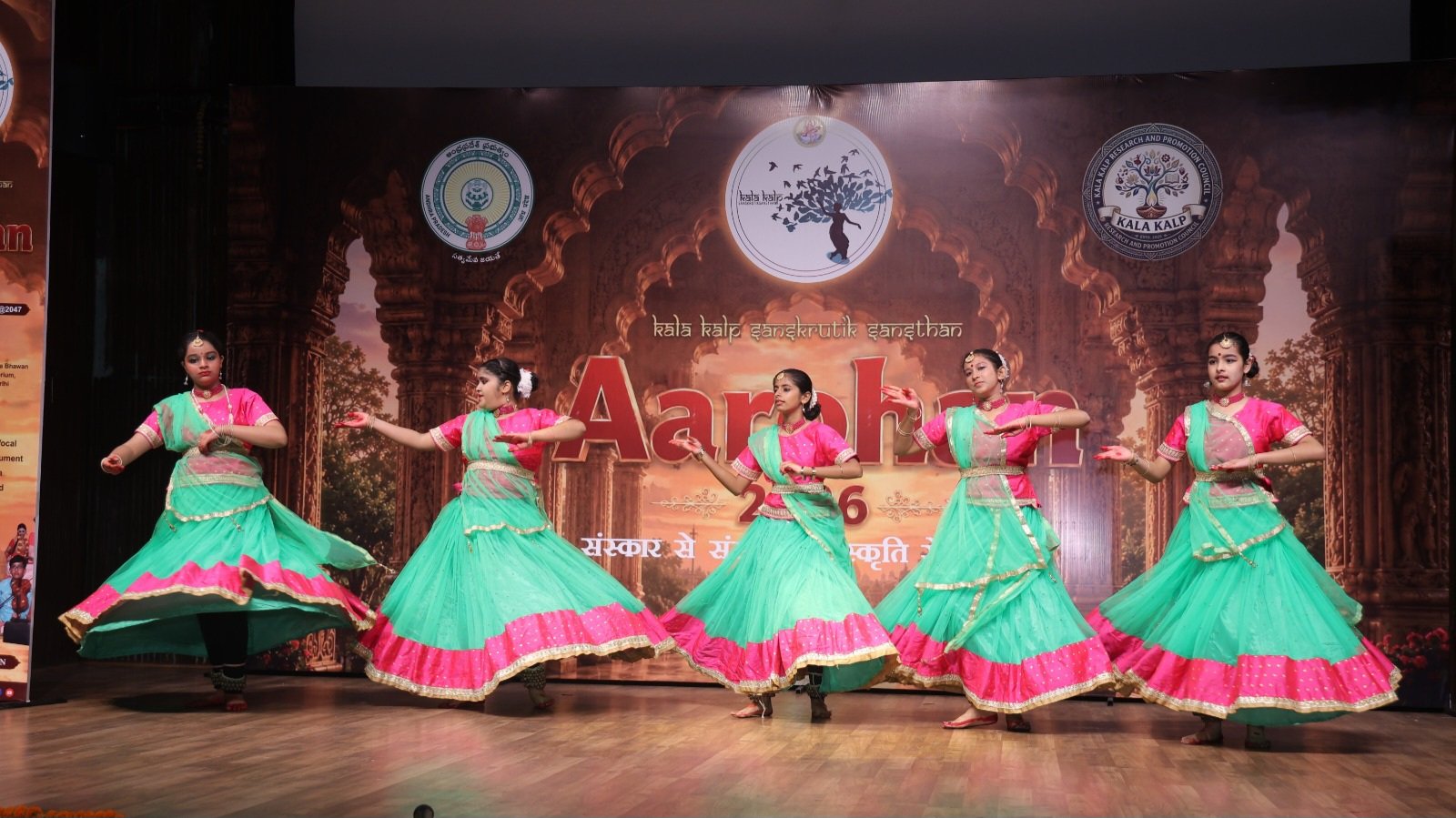
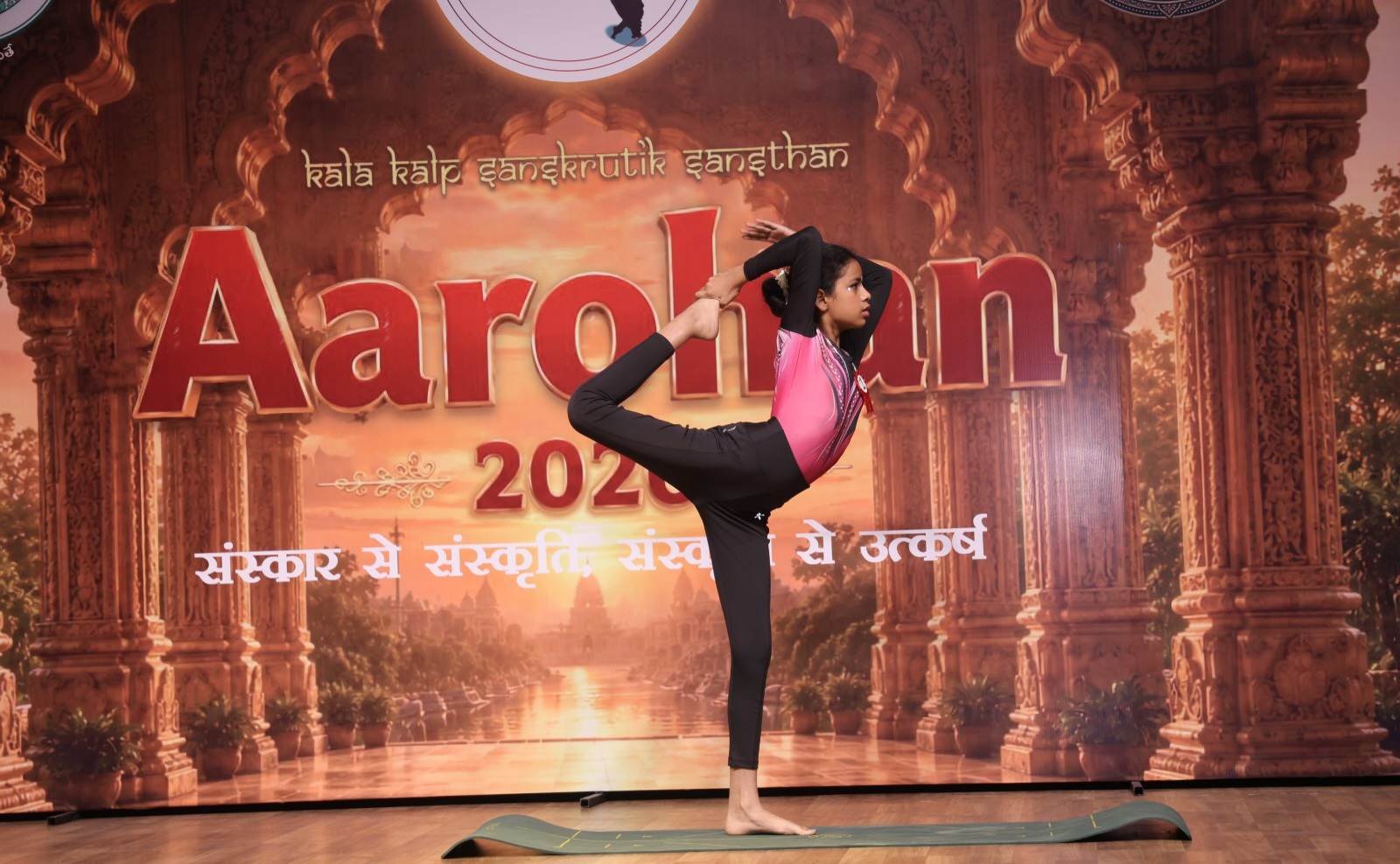
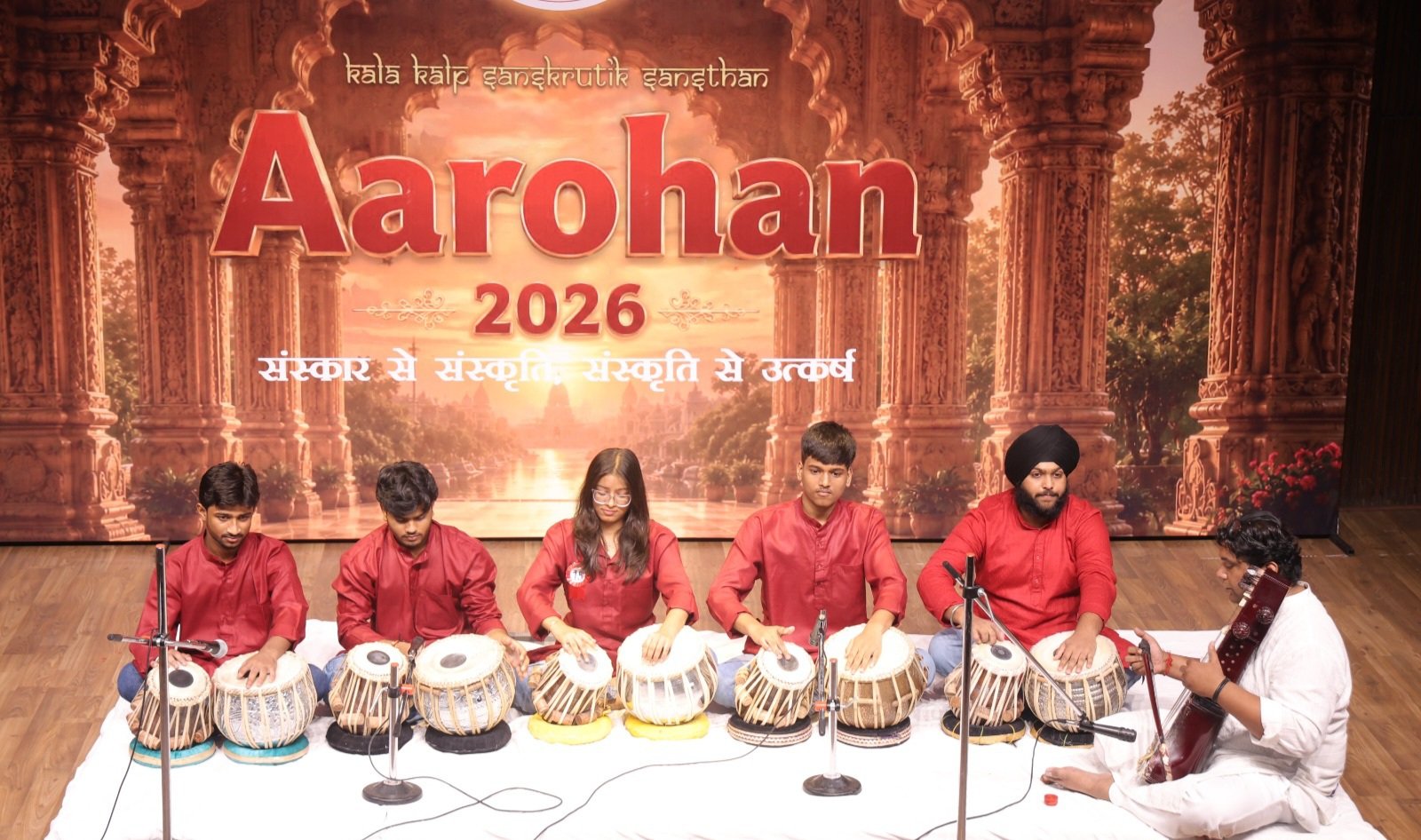
The day-long competitions held from 8 AM to 8 PM featured diverse categories including Indian Classical Dance, Folk Dance, Hindustani Vocal, Carnatic Vocal, Musical Instruments, Yoga and Vaidik Shloka presentation, with solo, duet, trio and group participation across relevant categories.
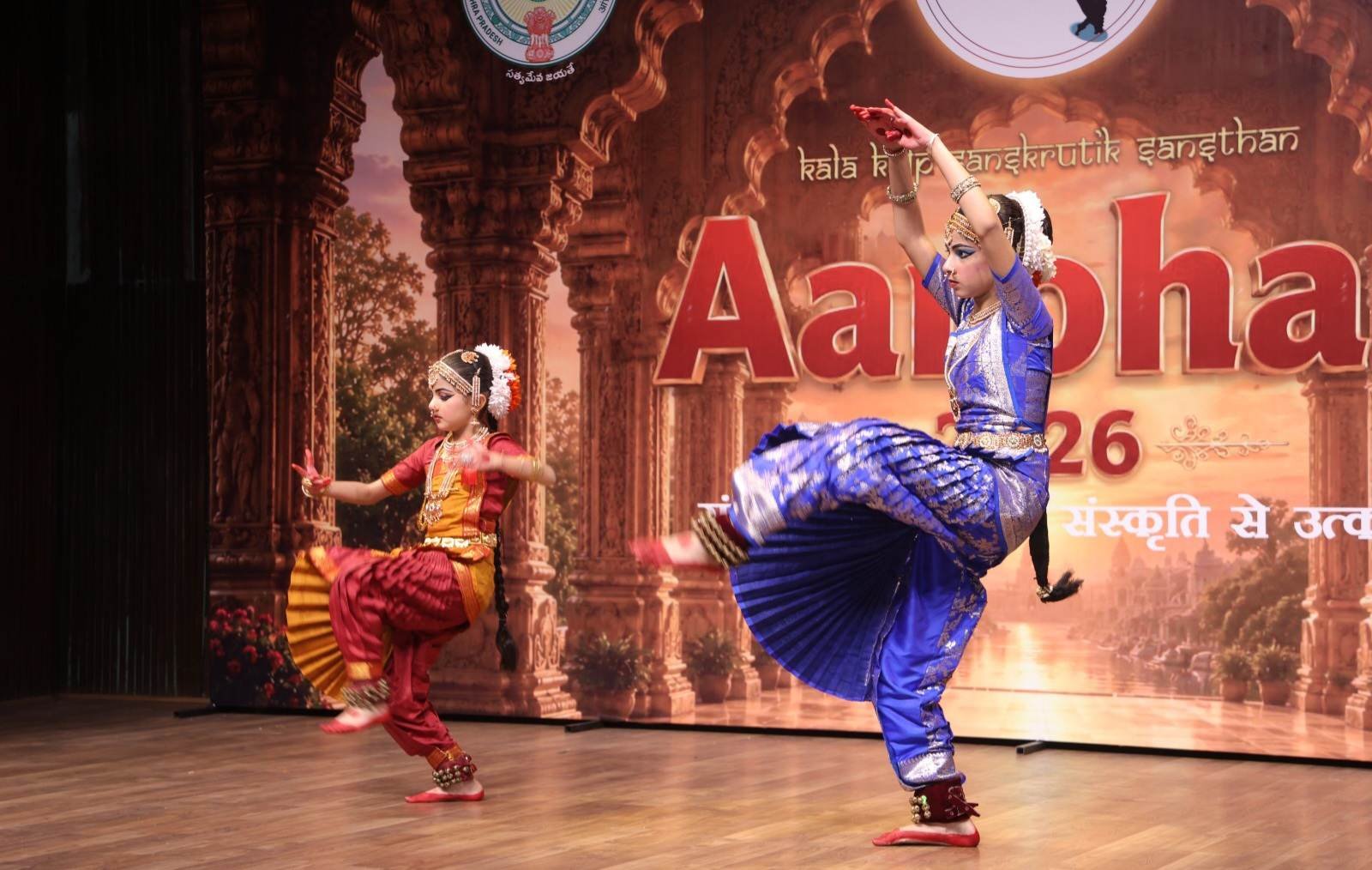
Their performances were evaluated by an eminent panel of gurus and experts representing different artistic disciplines.
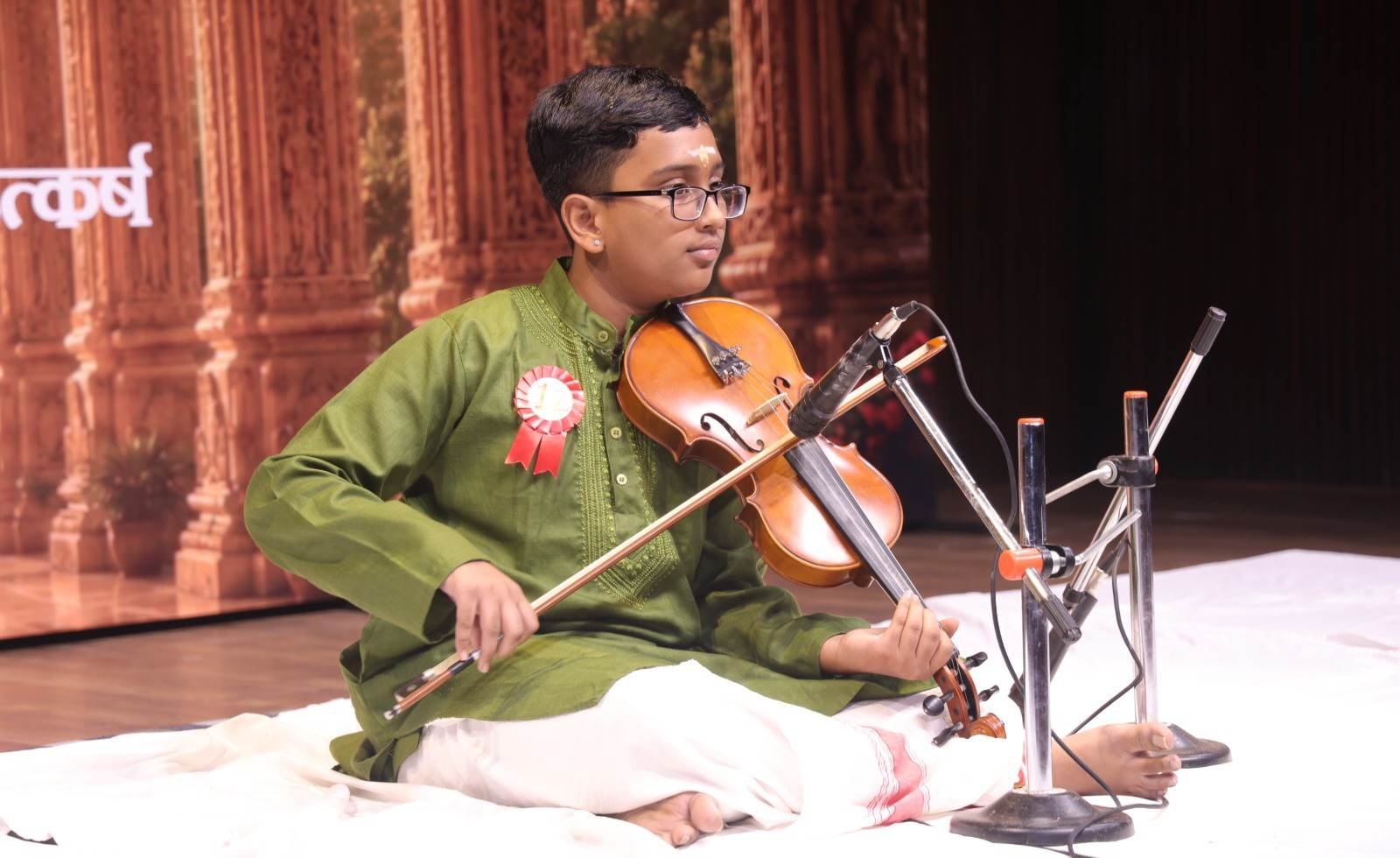
Aarohan 2026 was envisioned not merely as a competition but as a cultural movement connecting education, skills, artistic excellence, cultural awareness, values and national heritage.
Through the initiative, Kala Kalp Sanskrutik Sansthan aims to identify and encourage talented performers while helping ensure that these traditions are preserved, practised and passed on to future generations.
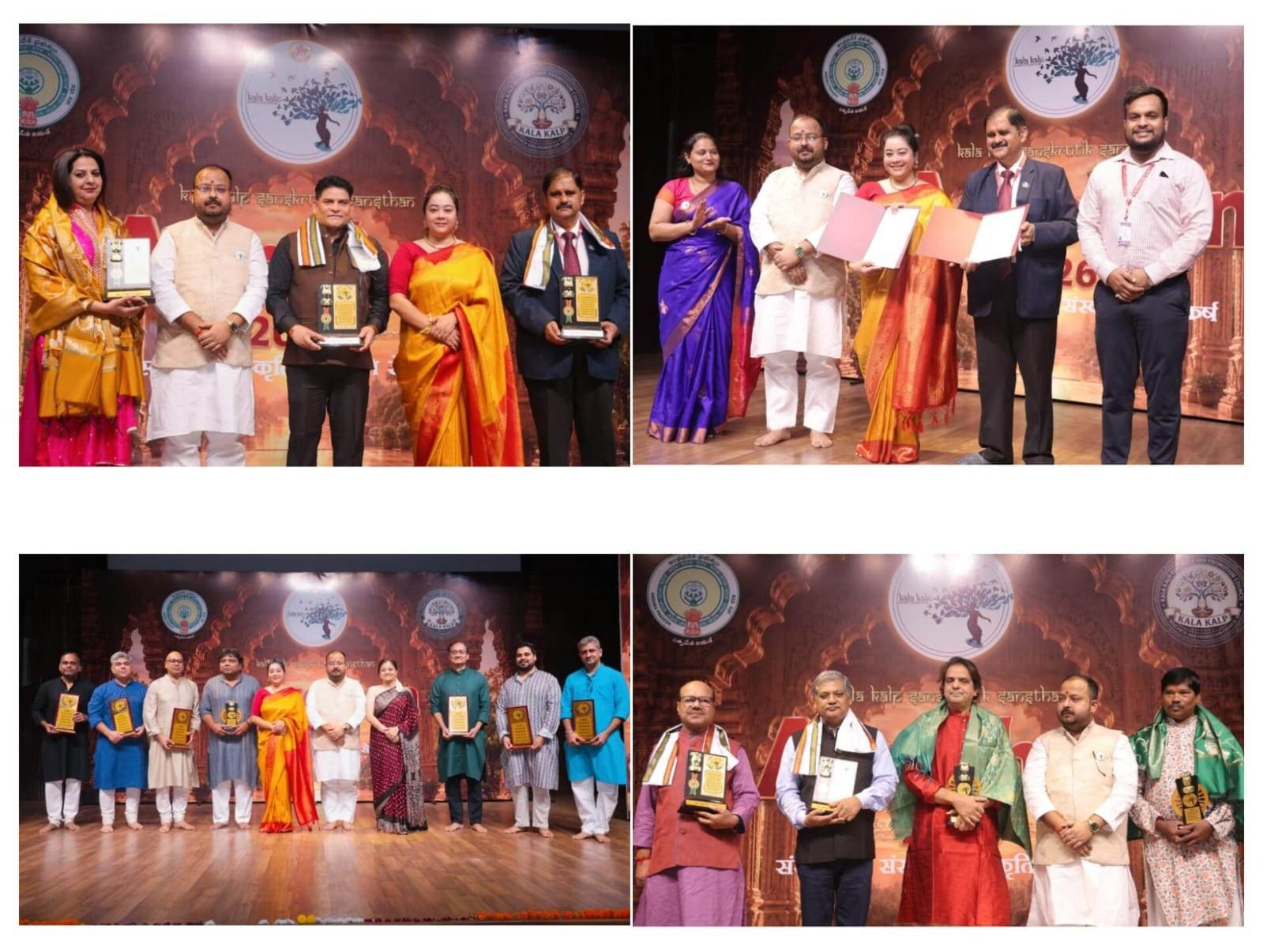
The programme was graced by distinguished guests and personalities including Noted author, Hindi scholar and former Acting Secretary, Lalit Kala Akademi, Dr. Jyotish Joshi; Joint Director, Department of School Education & Literacy, Ministry of Education, Government of India, Dr. Subhankar Mishra; Skill Bulls Global CEO Ms. Annu Wadhwa, Dr. Sandeep Gandhi and Head of Department, Janapada Sampada, Indira Gandhi National Centre for the Arts (IGNCA), Ministry of Culture, Government of India, Prof. K. Anil Kumar, along with renowned gurus, artists, educators and members of the cultural fraternity.
One of the key highlights of the event was the strengthening of academic and cultural collaboration, including an MoU exchange with Kalinga University. The initiative reflects Aarohan’s larger vision of connecting culture with education, research, skill development and opportunities for the next generation.
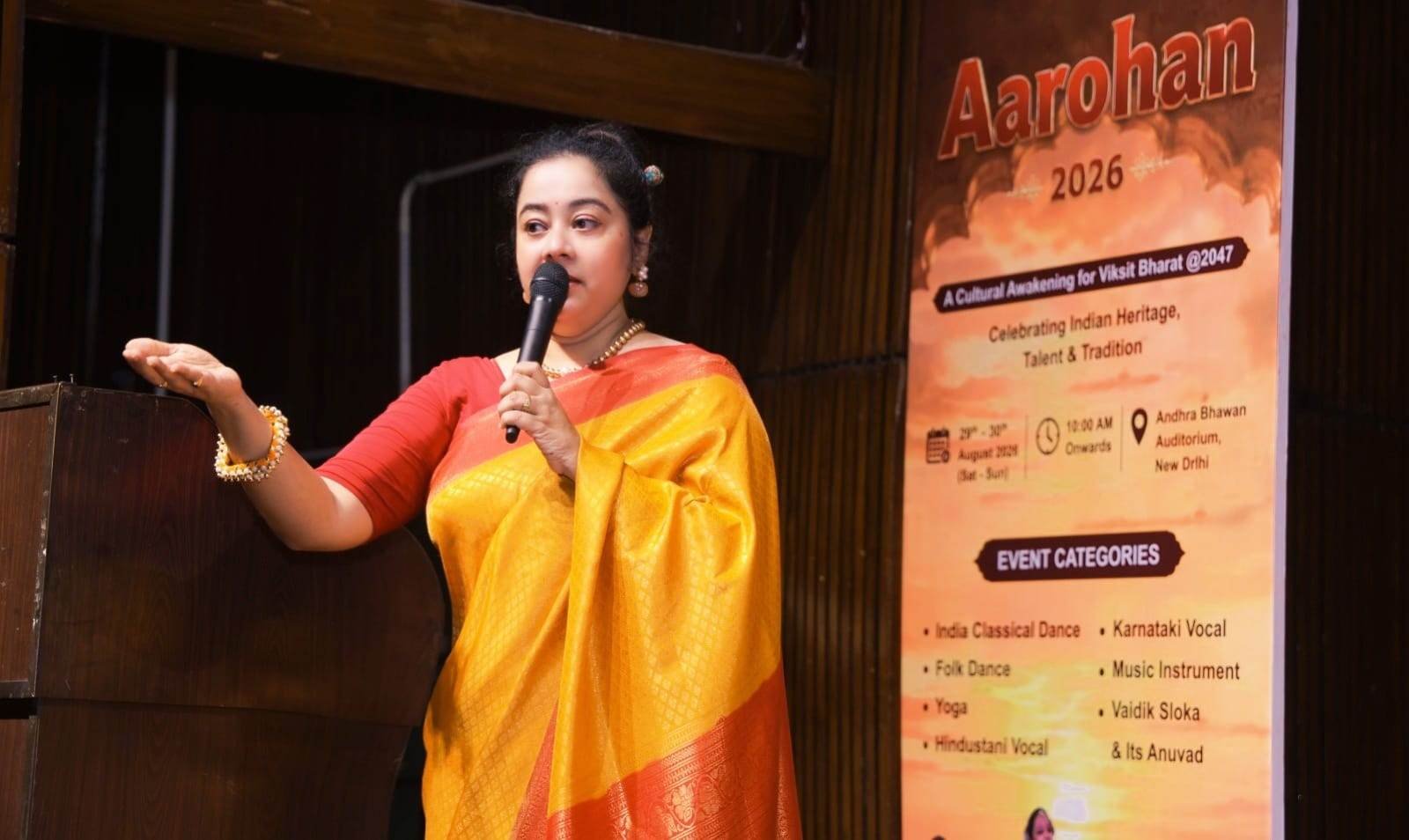
Speaking about the vision behind Aarohan, Kala Kalp Sanskrutik Sansthan’s founder director Dr. Atasi Misra said the initiative was to give young artists a meaningful platform where talent is recognised alongside discipline, values and respect for our cultural roots. “Indian performing arts carry generations of knowledge and wisdom.
Through AAROHAN, we want our young generation not only to perform our traditions, but also to understand, preserve and carry them forward with proud,” she added.
Kala Kalp Sanskrutik Sansthan’s vice president Mohit Madhav underlined the important role of youth in shaping the cultural future of the nation.
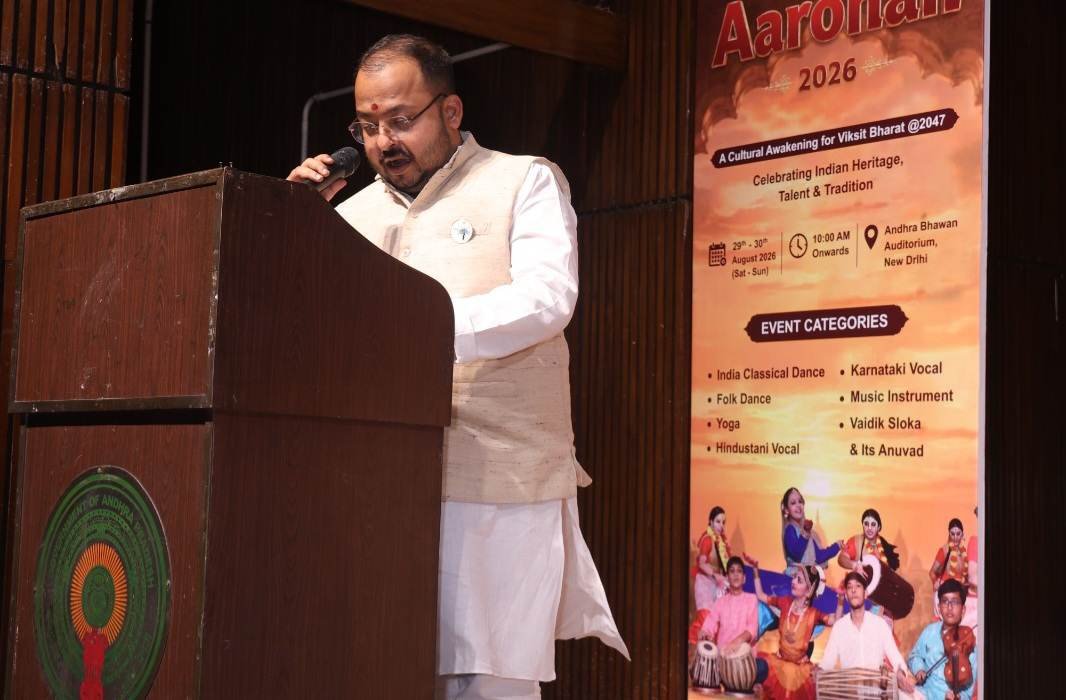

Calling them the “torchbearers” of India’s living heritage, he urged young artists to dream fearlessly, work with discipline and remain deeply connected to the country’s roots.
“Modern aspirations and Indian cultural values can progress together. Platforms like AAROHAN give young talent the confidence to come forward, express themselves and contribute meaningfully to the country’s cultural identity,” he said.
In his address, Prof. K. Anil Kumar highlighted the importance of educating children about their own art, traditions and cultural heritage.
“Education becomes truly meaningful when children understand not only the world around them but also the civilisation and cultural heritage to which they belong. Knowledge of our art, music, dance, literature, folk traditions and cultural practices gives children a strong sense of identity, belonging and respect for their roots,” he said.
“Parents have an invaluable role in this journey. Along with academic and professional education, children should be encouraged to experience Indian art and culture from an early age. Learning music, dance or traditional arts should not be viewed merely as an extracurricular activity; it contributes to discipline, sensitivity, values and cultural consciousness,” he observed.
The preservation of culture, Prof. K. Anil Kumar maintained, cannot remain the responsibility of institutions and artists alone. It begins within our homes, and parents, teachers and society must collectively ensure that cultural knowledge is passed to the next generation as a living inheritance.
The importance of acquiring diverse skills was also highlighted by Ms. Annu Wadhwa, who pointed out that the rapidly evolving world requires young people to develop versatility, adaptability and multiple competencies.
“Skills transform potential into capability. Today’s youth should not limit themselves to being proficient in only one area. The future belongs to individuals who are willing to continuously learn, adapt and develop multiple skills,” she said.
“Artistic training itself teaches several powerful skills—discipline, creativity, communication, confidence, teamwork, time management and the ability to perform under pressure. When these qualities are combined with academic, professional, technological and entrepreneurial skills, young people become more versatile and better prepared for opportunities and challenges,” she observed.
“Our focus should therefore move beyond simply making our youth qualified; we must make them skilled, adaptable, confident and capable. Every additional skill creates another possibility. A multi-skilled young generation will have the ability not only to find opportunities but also to create opportunities for themselves and others,” she added.
Dr. Jyotish Joshi spoke about the importance of deeper knowledge of India’s cultural heritage, stressing that culture must not merely be celebrated but understood.
“Culture should not only be celebrated; it must also be understood. To become a truly knowledgeable individual, one must develop an awareness of the heritage, literature, arts, philosophies and traditions that have shaped our civilization,” he said.
“Performance becomes more meaningful when it is supported by knowledge. A dancer should understand the cultural and literary context of the composition being performed; a musician should appreciate the tradition behind the music; and every young person should know something about the cultural journey of the society to which they belong,” he added.
“Knowledge of cultural heritage develops perspective, sensitivity and a deeper sense of identity. Our young generation must therefore be encouraged not only to practise art but also to read, research, question and understand the cultural heritage they inherit. Preservation becomes meaningful when knowledge accompanies practice,” he observed.
Dr. Subhankar Mishra made a strong case for the importance of patience in the development of talent and skills.
“Every meaningful skill takes time to develop. Whether a child is learning dance, music, an instrument, academics or any other discipline, progress cannot always be measured immediately. Learning is a journey of practice, correction, repetition and gradual improvement,” he said.
Young artists, he said, should understand that excellence is not achieved in a day. There will be successes as well as disappointments, but both are important parts of learning. A competition should therefore be viewed as an opportunity to perform, observe, learn and improve—not simply as a race to win a prize.
“Parents have an equally important responsibility. Children need encouragement, patience and emotional support while developing their abilities. Comparing one child’s progress with another can create unnecessary pressure because every learner has an individual pace and strength,” he said.
“When patience, consistent practice, good guidance and parental encouragement come together, talent develops into lasting ability. We must create an environment where children enjoy learning, accept correction positively and develop the perseverance required to achieve excellence,” he added.
Through Aarohan 2026, Kala Kalp Sanskrutik Sansthan once again reaffirmed its commitment to preserving, promoting and sustaining Indian cultural heritage through performing arts education, training, cultural programmes, competitions, workshops, research-oriented initiatives and opportunities for artists.
The event brought together a common message from its speakers: nurturing the next generation requires more than academic achievement. Education must be complemented by cultural knowledge, skills, patience, discipline, parental support and opportunities for creative expression.
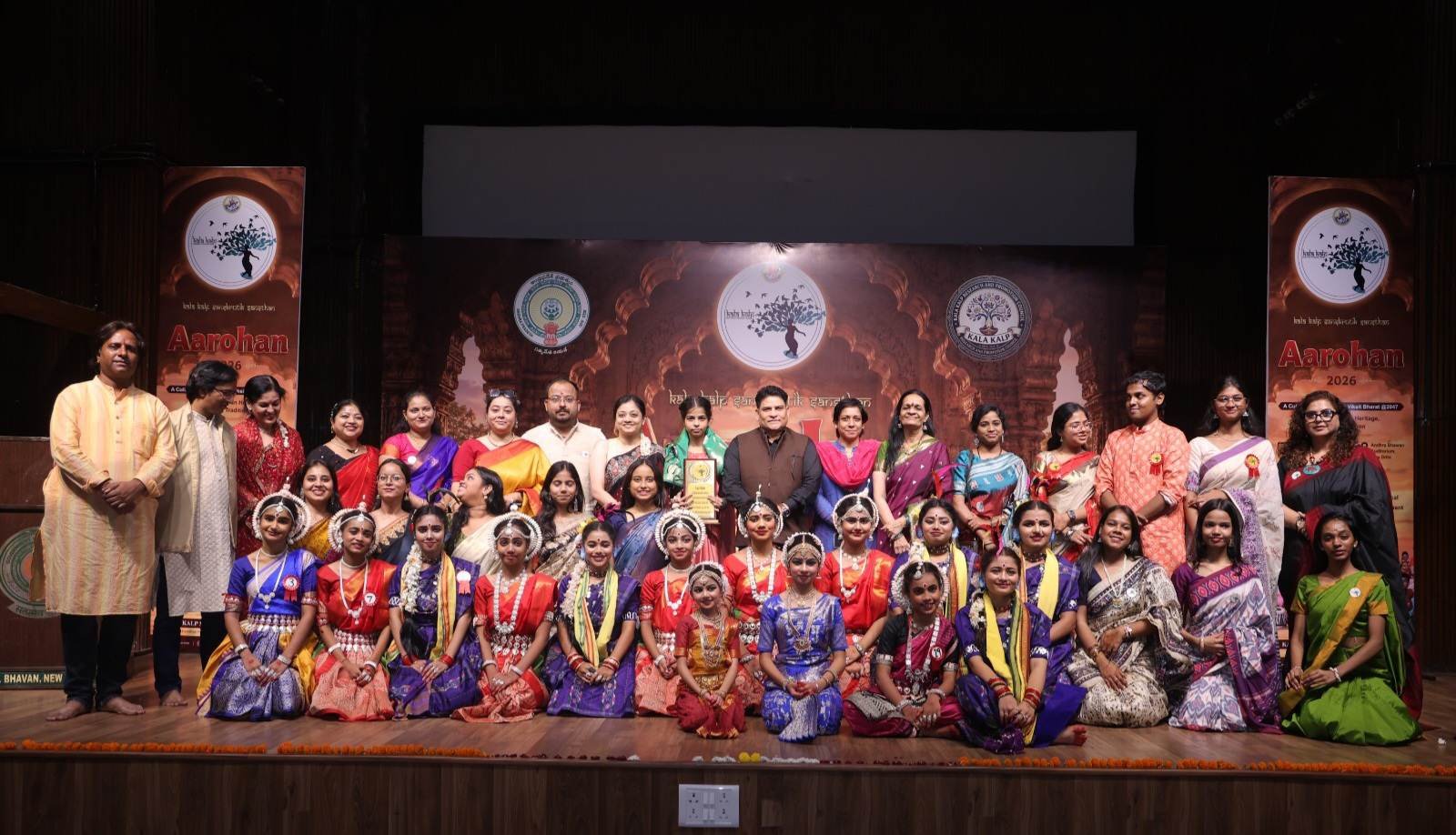
The recognition of participants will follow a three-tier award system based on jury scores. Those securing 90% or above marks will receive Gold Aarohan Artiste Award, while participants scoring between 89% and 70% will receive Silver Aarohan Artiste Award. The remaining participants will receive Bronze Aarohan Artiste Award.
The awardees will be felicitated at Kala Kalp Sanskrutik Sansthan’s Parijaat Mahotsav to be held on September 27.
With its emphasis on both tradition and aspiration, Aarohan 2026 has sought to create a stronger cultural and educational ecosystem where tradition meets aspiration, knowledge strengthens creativity, skills empower youth and young artists become confident torchbearers of India’s cultural legacy.
In doing so, it is helping a new generation find its voice while ensuring that the cultural legacy handed down through the ages continues to find a place in the future.