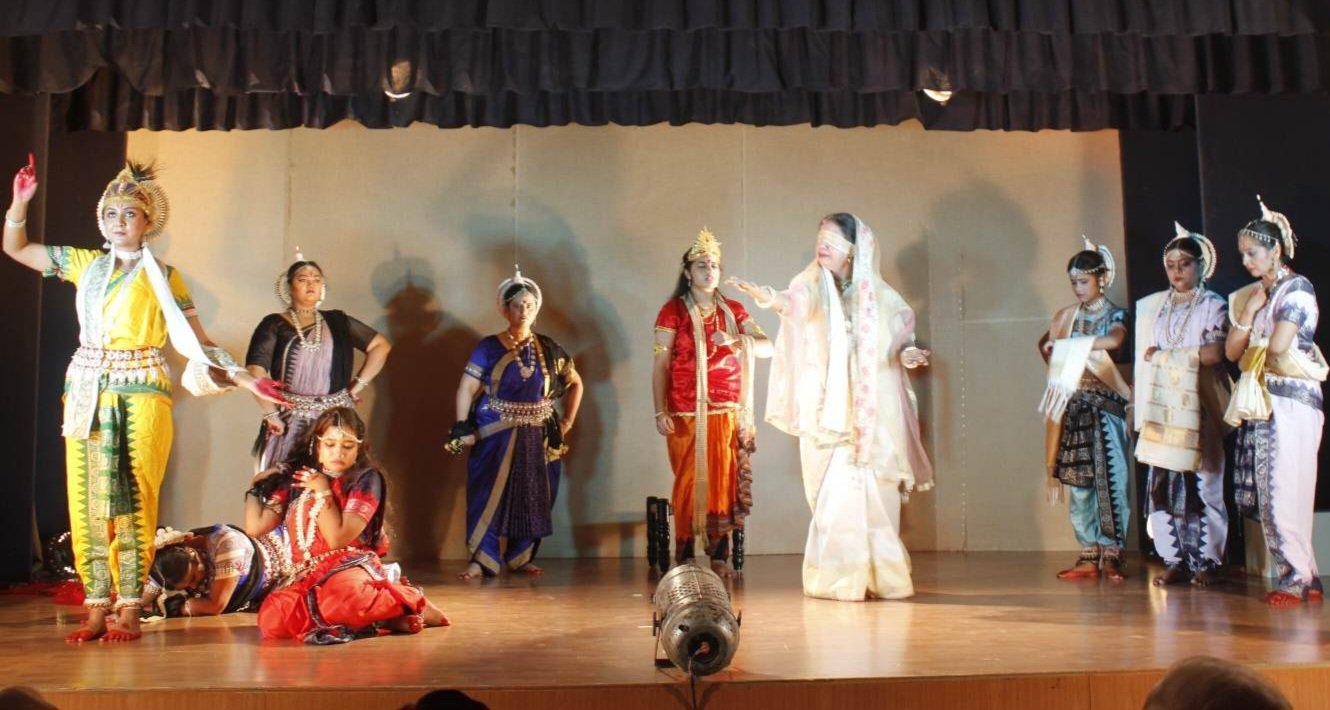
Ahmedabad: Art lovers witnessing Odissi dance drama ‘Gandhari: The Unseen Revelation’ at Gujarat Viswakosha auditorium in Ahmedabad on September 19 were taken on an emotional roller-coaster ride.
For many in the audience, it was perhaps the first time they had encountered Gandhari not merely as the blindfolded wife of King Dhritarashtra, but as a woman of intellect, courage, anguish and moral conviction.
The occasion was brought to them by the artistes of Aum Arts Dance Academy, an Odissi dance institution founded in Ahmedabad by celebrated Odissi dance exponent Guru Dr Suprava Mishra in 1995.
“Like an actor, a classical dancer also never feels satisfied. There is always a quest to discover and portray new characters on stage. It was when I was contemplating Urmila (wife of Lakshmana), two Mahabharata characters ‘Kunti’ and ‘Gandhari’ came to my mind. I chose ‘Gandhari’ because hers is one of the least-discussed characters. And, whenever the Mahabharata is discussed, it is only ‘Draupadi’ who takes centre stage, not Gandhari,” said Guru Dr Suprava Mishra.
She said another compelling reason for choosing Gandhari was the character being the strong supporter of women’s dignity and empowerment.
“After Draupadi’s vastraharan, Gandhari raises her voice against the atrocity committed against a woman. In the royal court of Hastinapur—dominated by self-interest and conspiracy—Gandhari stands as the ultimate voice of wisdom, truth, and dharma, holding up a mirror to an empire teetering on the brink of destruction,” she said.
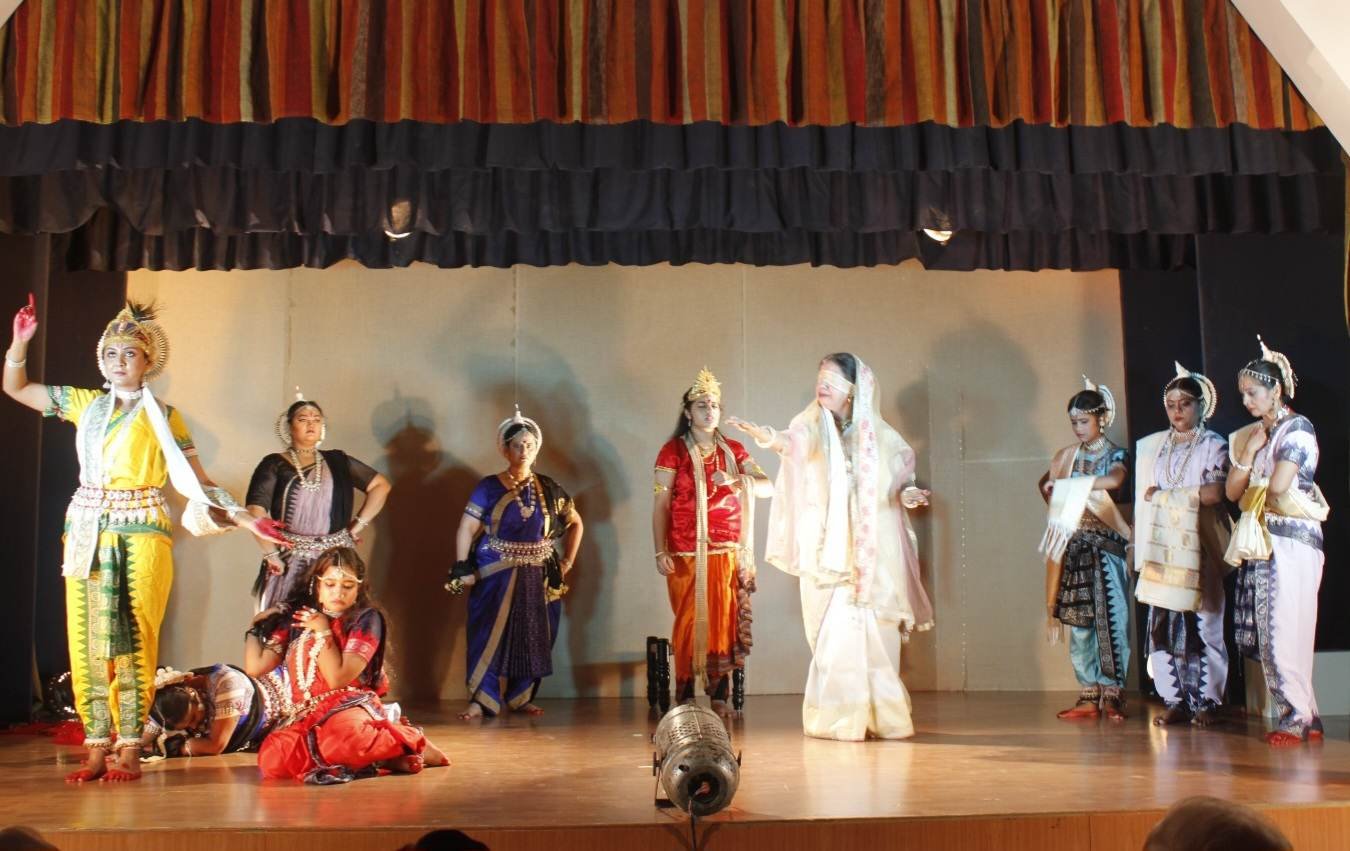
According to Dr Mishra, her intellect was free from blind attachment (raga) toward her sons and hatred (dvesha) toward others. She questioned Dhrutarashtra and everyone in the royal court why they allowed to happen such a humiliation.
“Subsequently I sought help from Padma Shri Kumarpal Desai, the writer of ‘Agnisikha’, written on Gandhari. He immediately couriered the book to me. I went through the 400-page book written in Gujarati before conceptualising the production,” said Guru Dr Mishra.
As the sun dipped over Ahmedabad city, the auditorium came alive with art lovers filling to its capacity. Most people know Gandhari as wife of King Dhrutarashtra and nothing beyond that.
Once the curtains parted and Gandhari’s story began unfolding, the audience was drawn into a world of layered emotions, moral dilemmas and human frailties.
For Guru Dr Mishra, playing Gandhari’s character was a challenging one.
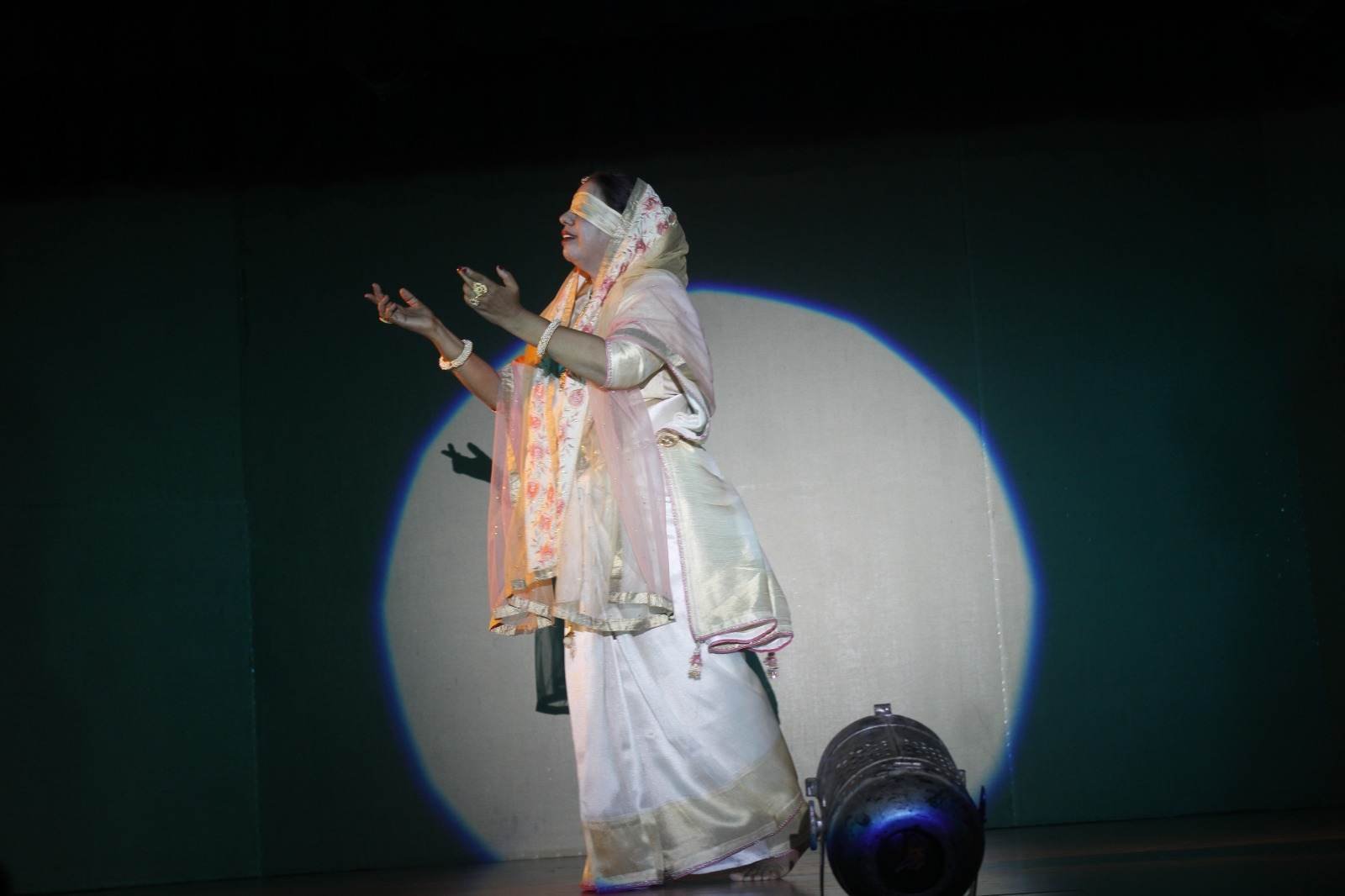
“For me, enacting the eponymous character was a huge challenge. A dancer express emotions and feelings largely through her eyes movements. But here, the case was different. I had to perform blindfolded. I had to use my body movements to compensate for the absence of eye movements. At the same time, performing blindfolded also helped me slip into the skin of character almost instantly,” she observed.
The production began with a brief introduction before moving through a series of carefully crafted episodes, including ‘Sakhi Dance’, ‘Marriage Scenes’, ‘Gandhari Remembering Childhood’, ‘Celebrations of Motherhood’, ‘Draupadivastraharana’, ‘War Scene’, ‘Dialogue between Duryodhan and Gandhari’ ‘Big War’, ‘Gandhari Bedana’ and ‘Gandhari Shrap’, transporting the connoisseurs to the Mahabharat era while bringing Gandhari’s inner journey into sharp focus.
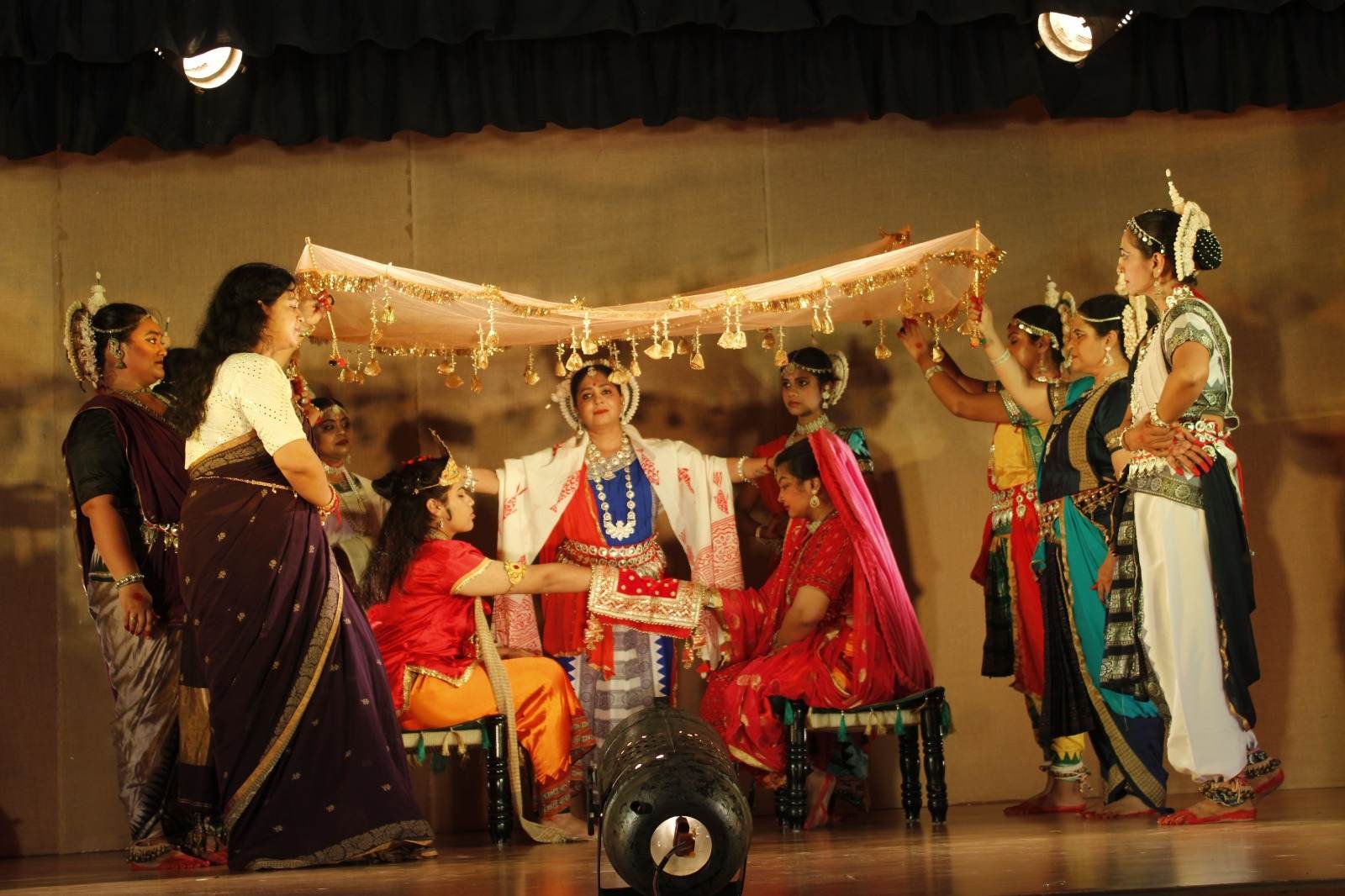
A total of eleven artistes including Guru Dr Suprava Mishra along with four backstage members, worked in tandem to bring the production to life. left no stone unturned to give justice to their respective characters.
Huge round of applause that followed each scene and standing ovation at the end spoke volumes about the impact of the performance.
Most art lovers found two episodes remarkable. One, the scene after Droupadi’s vastraharan, when Gandhari holds everyone present in the royal court accountable for allowing such a disgraceful act to take place. Second, when Duryodhan, on the eve of battle, seeks blessing from his mother. Gandhari responds with words ‘Akshaya Heu Punya Jagate, Dharma Ra Heu Jaya’.
While most scenes received generous applause, thunderous applause continued long after the performers had completed the two scenes.
Creating the music for the production was another demanding task, Dr Mishra said.
“Since I decided to present the production in Gujarati, I read Padma Shri Kumarpal Desai’s book in its original language. Then I prepared the script in Hindi, sent it to him, asking him to render it in Gujarati. After receiving the Gujarati script, I translated it into Odia and sent to Guru Nimakanta Routray for music composition. I had to do so because if a music director can’t understand the scene, he won’t be able to create the required bhava with the required Raga. Guru Nimakanta Routray and Guru Ajaya Kumar Choudhury did a wonderful job,” she said.
The musician ensemble featured Guru Dhaneswar Swain on Mardala, Guru Ajaya Kumar Choudhury on Tabla, Guru Srinibash Satpathy on Flute, Prakash Kumar Mohapatra on Sitar, Sanjib Kumar Kunda on Violin and Rajkishore Das on Manjira. Guru Dr Nimakanta Routray, Bijayalaxmi Routray and Abhilipsha Patra lent their voices to the production.
Although the production was entirely in Gujarati, Dr Suprava Mishra deliberately retained the Odia song ‘Akshaya Heu Punya Jagate, Dharma Ra Heu Jaya…”. The audience accepted the song wholeheartedly, proving that music can transcend linguistic boundaries.
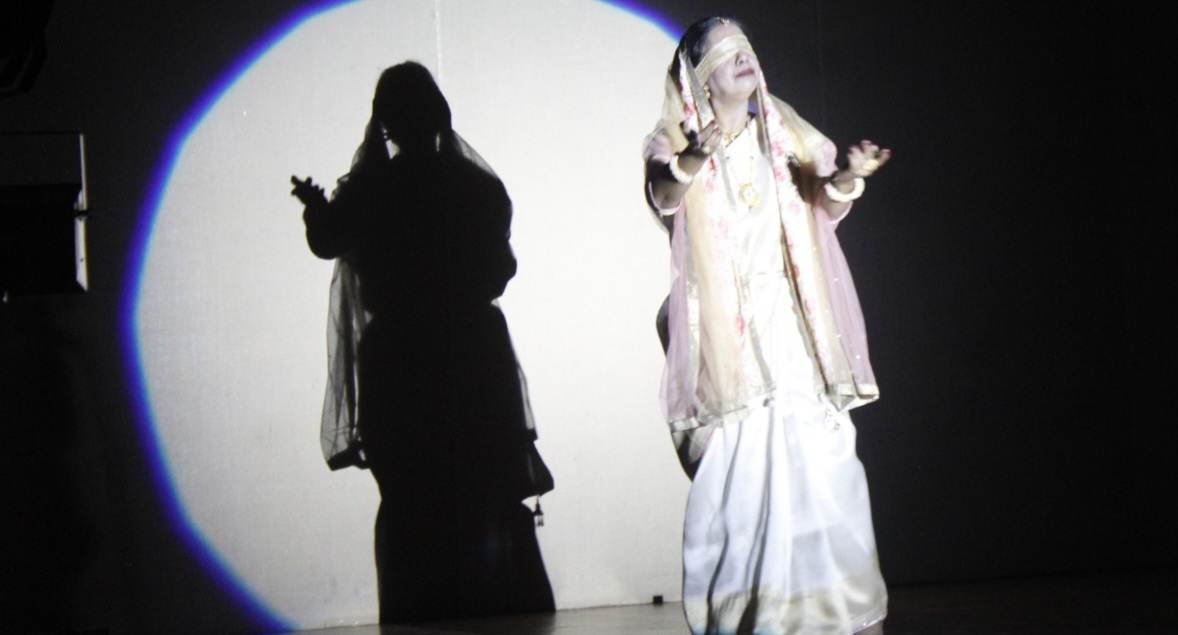
The production was marked by a clean, uncluttered presentation that kept the art lovers glued to their seats. By the end of the performance, the artistes were rewarded with a standing ovation.
The artistes who left no stone unturned to do justice to their characters were Guru Dr Suprava Mishra (Gandhari), Prajakta (Dhrutarashtra), Ahiree (Krishna), Sucharita (Duryodhana), Priyanka (Shakuni), Kajari (Dushasan), Prachi (Young Gandhari), Anjali (Draupadi), Meghana (Bhima), Shivika (Arjuna) and Dr Shikha (Yudhishtir).
Along with the artistes, Falguni Hiren is also to be given an equal share of the credit for the production’s success. Her voice, lending life to Gandhari in the background, added an extra layer of charm and gravitas to the performance. She also effortlessly donned the anchor’s hat, holding the evening’s proceedings together with aplomb.
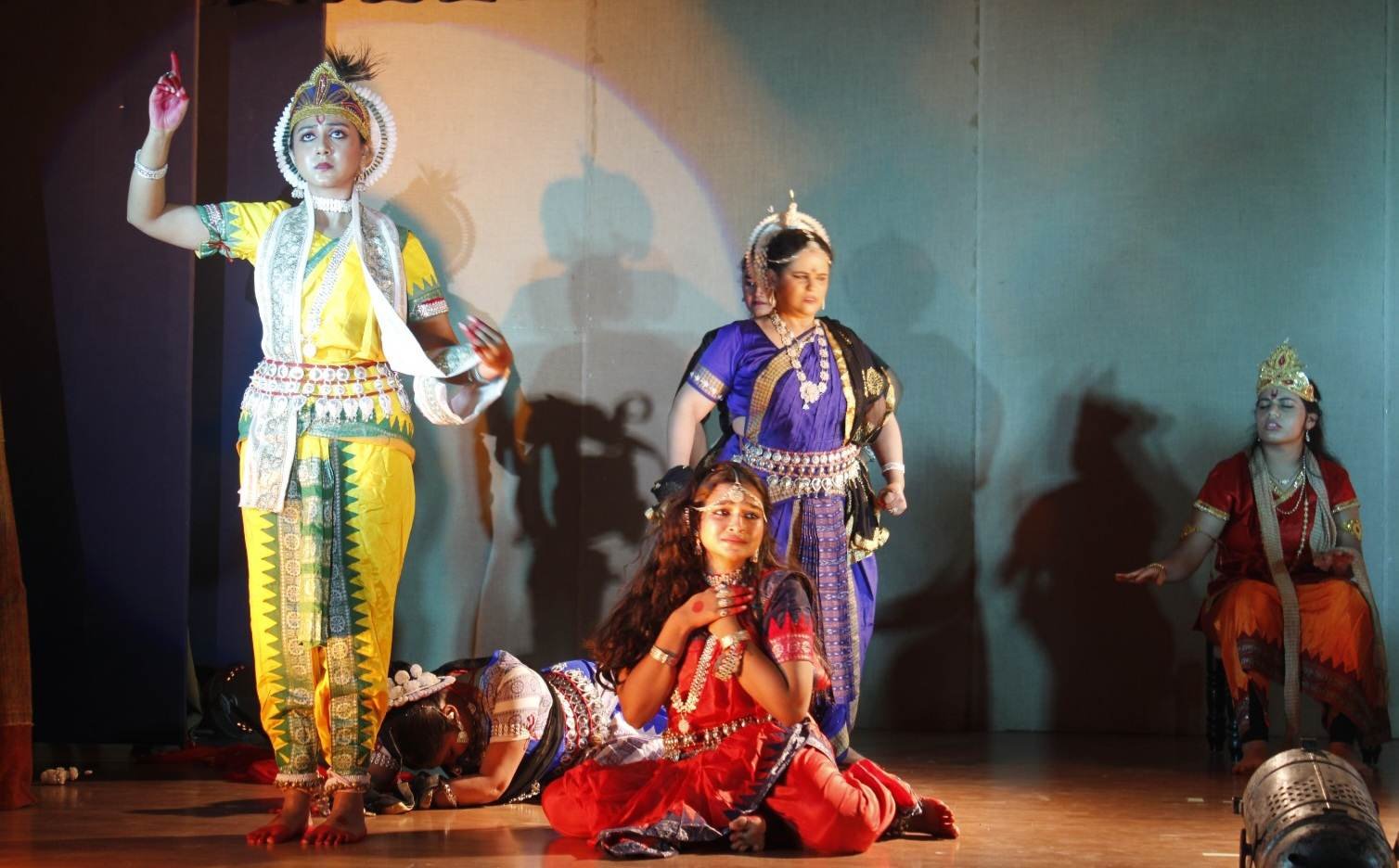
By bringing Gandhari out from the shadow of more frequently discussed Mahabharata characters, ‘Gandhari: The Unseen Revelation’ offered audiences a fresh perspective on a woman whose voice, wisdom and anguish have often remained in the margins.
The production, with its compelling narrative, disciplined choreography, seamless entries and exists and evocative music, deserves to travel beyond Ahmedabad and find a place on festival stages across the country.